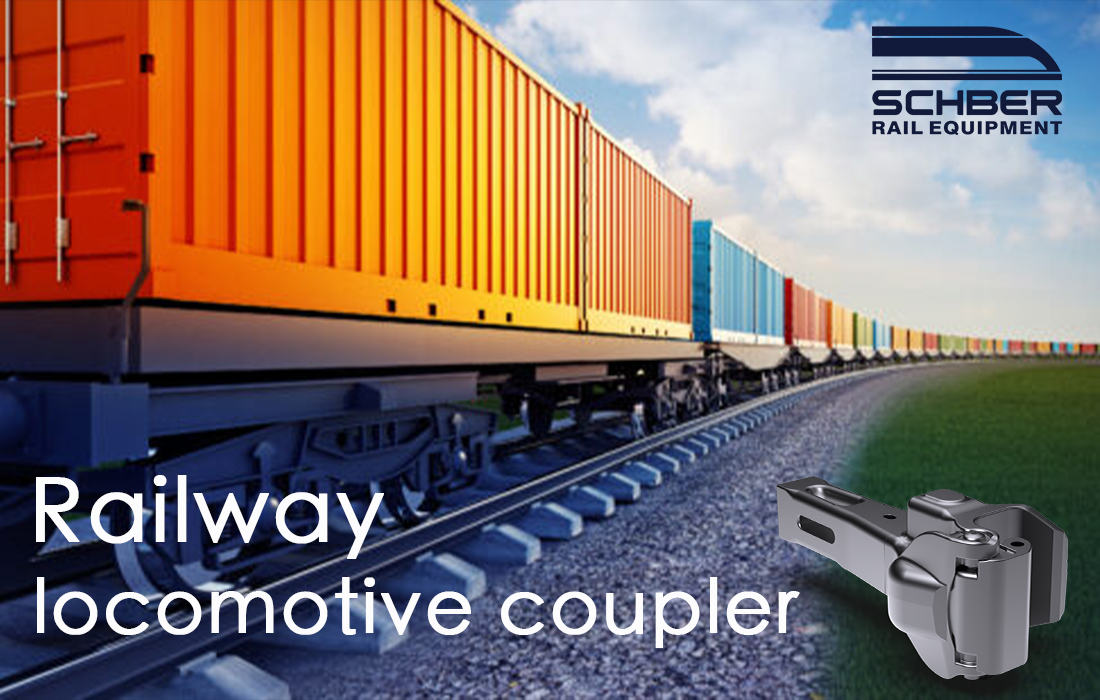
The railway locomotive coupler is a critical component of the locomotive’s connection system. Its primary role is to connect the locomotive to other rolling stock (such as passenger or freight cars) and to transmit the tractive and braking forces generated during train operation.
During operation, the coupler is subjected to longitudinal loads from various directions; therefore, it must possess sufficient strength and reliable connection capabilities. It also works in conjunction with a draft gear (buffer mechanism) to mitigate longitudinal shocks. Research has linked the load-bearing stability of the coupler-draft gear assembly to the operational safety of heavy-haul locomotives.
Primary Functions of the Railway Locomotive Coupler
The railway locomotive coupler primarily serves to connect vehicles. It links the locomotive to passenger cars, freight wagons, or other railway rolling stock to form a complete train.
The coupler is also responsible for transmitting tractive force. When the locomotive starts or accelerates, tractive force is transmitted rearward through the coupler. Conversely, during braking, the coupler withstands corresponding longitudinal forces.
Additionally, the coupler must accommodate the shocks and vibrations inherent in vehicle operation. Consequently, it is typically used in conjunction with a draft gear (buffer) and other related coupling and cushioning components.
Basic Structure of the Railway Locomotive Coupler
A railway locomotive coupler generally consists of a coupler head, a coupler shank, and a coupler tail. The interior of the coupler head houses various locking and uncoupling components.
Common components include the knuckle, knuckle pin, lock, knuckle thrower, and the uncoupling mechanism. These parts work together to execute the coupling and uncoupling operations.
The coupler tail connects to the draft gear assembly located behind it. It typically interfaces with components such as the coupler yoke, allowing longitudinal loads borne by the coupler to be transferred to the vehicle underframe.
Three Operational States of the Railway Locomotive Coupler
Railway couplers generally operate in three states: locked, unlocked, and fully open.In the locked state, the knuckle is securely held in the locked position. Once adjacent vehicles are coupled, the coupler must remain stable to prevent accidental uncoupling during train operation.
In the unlocked state, the locking mechanism releases the restraint. The coupler knuckle can open under the application of external force.
In the fully open position, the knuckle is completely open, allowing the coupler to connect with another vehicle.These three states collectively ensure that the coupler can perform standard coupling and uncoupling operations.
How railway locomotive couplers transmit tractive force
Once the locomotive starts moving, tractive force is transmitted from the locomotive body to the coupler. The coupler then transfers this force to the trailing vehicles.
The longer the train, the more complex the longitudinal forces acting on the coupler become. For heavy-haul trains, the stress state of the coupler requires particular attention.
During heavy-haul operations, couplers may be subjected to significant tensile and compressive forces. Research indicates that extreme compressive forces can affect the stability of the coupler and its draft gear assembly.
Therefore, locomotive couplers must be maintained in good structural condition. Train marshalling and handling practices also influence the forces acting on the coupler.
Common inspection items for locomotive couplers
Routine inspections focus on the external condition of the coupler. Inspectors check the coupler body for cracks, significant deformation, or abnormal wear.The knuckle and locking mechanism must also be inspected to ensure all components operate correctly.
Additionally, the coupler shank (tail) and connection points require inspection; any abnormal clearances, looseness, or damage must be addressed promptly.
For heavy-haul locomotives, attention must also be paid to coupler wear resulting from long-term operation, as high longitudinal loads can increase the operational stress on these components.
Maintenance requirements for locomotive couplers
Maintenance must be performed in accordance with the technical specifications for the specific locomotive and coupler models.
Couplers and related components should be kept clean during maintenance, and appropriate measuring tools must be used for inspections.
Components exhibiting cracks or severe wear must not remain in service. Maintenance personnel must determine whether to repair or replace parts based on relevant technical standards.
The coupler is a critical safety component; maintenance must be carried out by trained professionals.
Safety precautions for locomotive couplers
Locomotive couplers present significant mechanical risks during coupling and uncoupling operations. Personnel must adhere to safety regulations regarding railway vehicle operations.
When inspecting couplers, ensure the vehicle is in the prescribed safe state. Do not perform manual operations if there is a risk of vehicle movement.
For automatic couplers or specialized coupler systems, inspections and maintenance must also be carried out in accordance with the specific operational requirements of the equipment.
Future Trends in Railway Locomotive Couplers
With the development of heavy-haul railways and modern rail transit, couplers are required to withstand increasingly complex operating conditions.
Current research focuses on aspects such as coupler strength, longitudinal dynamics, cushioning performance, and operational safety. Some studies also explore the use of sensors to monitor the forces acting on couplers, thereby providing data to support the analysis of their operational status.
In the future, railway locomotive couplers are likely to evolve towards higher strength, lighter weight, and integrated condition monitoring capabilities.
Summary
The railway locomotive coupler is a critical component of the connection system between locomotives and rolling stock. It performs tasks such as coupling, traction force transmission, and the absorption of longitudinal impact loads.
The coupler consists of multiple structural components that work together to execute locking, unlocking, and fully open actions.
During routine use, the coupler’s exterior, locking mechanism, knuckle, and connection points require regular inspection. Any abnormalities detected must be addressed promptly in accordance with technical specifications.
Proper use and standardized maintenance of railway locomotive couplers help ensure the stable operation of the coupling system.