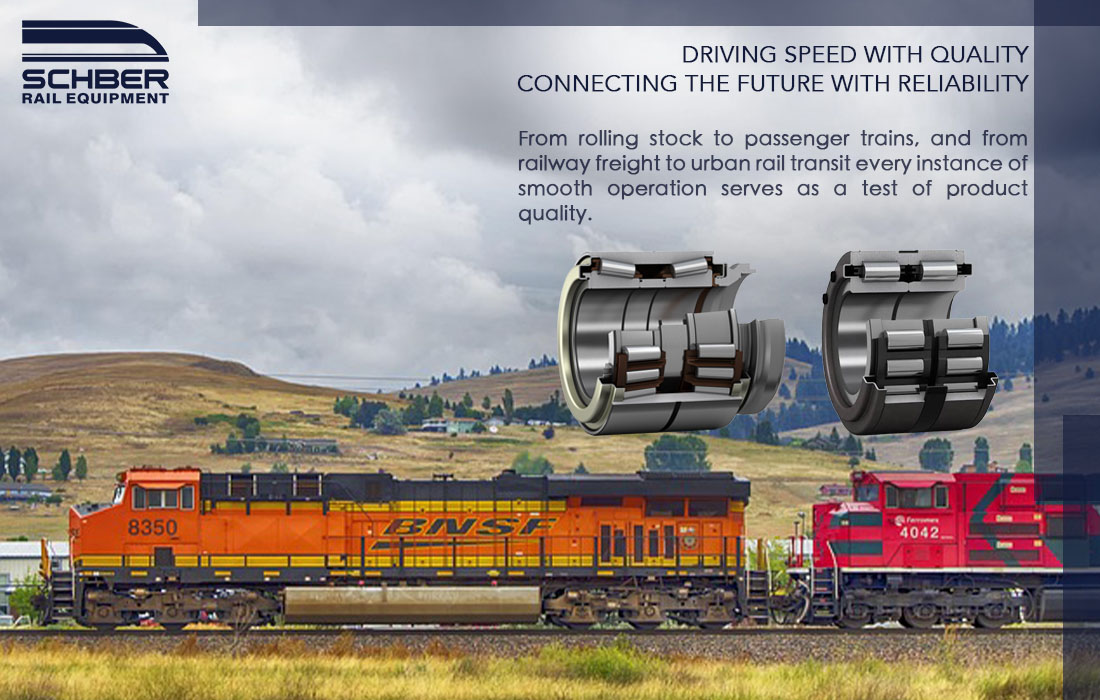
Railway bearings are subjected to high-speed rotation, heavy loads, impacts, and track-induced vibrations over long periods. The operating condition of the bearings directly affects vehicle stability. Vibration detection helps identify anomalies during bearing operation.
Vibration detection focuses primarily on parameters such as amplitude, frequency, velocity, and acceleration. Personnel can assess the bearing’s condition by analyzing vibration signals. Maintaining appropriate vibration levels ensures the smooth operation of railway vehicles.
Importance of Railway Bearing Vibration Detection
Vibration signals may change when bearings experience wear, pitting, or spalling. Anomalies in the raceway can also generate distinct vibration characteristics.
Timely vibration detection helps identify potential issues. Detection data can also be used to analyze bearing operational trends.
High-speed railway vehicles operate at high bearing speeds, meaning even minor anomalies can escalate over time. Therefore, vibration detection is of great significance.
Railway Bearing Vibration Detection Parameters
Railway bearing vibration detection typically involves monitoring multiple parameters.Vibration acceleration reflects high-frequency anomalies and is valuable for analyzing early-stage defects.
Vibration velocity reflects the overall operating condition of the bearing and is commonly used to evaluate operational stability.Vibration displacement aids in analyzing low-frequency vibrations and is suitable for observing large-amplitude mechanical vibrations.
Vibration frequency helps identify the source of anomalies, as different defects typically produce distinct frequency characteristics.A comprehensive analysis of these parameters provides a complete picture of the bearing’s operating condition.
Railway Bearing Vibration Detection Methods
Personnel typically install vibration sensors on the bearing housing or related structural components to capture vibration signals during operation.
Stable testing conditions are essential, as rotational speed, load, lubrication status, and ambient temperature can all influence the results.
Therefore, personnel must record relevant operational parameters. Standardizing test conditions improves the comparability of data.
Railway Bearing Vibration Spectrum Analysis
Spectrum analysis is a key method in vibration detection, allowing complex vibration signals to be broken down into their constituent frequency components.
Personnel can identify anomalies by observing peaks in the frequency spectrum. Analyzing characteristic frequencies allows for a more detailed assessment of the bearing’s operating condition.
Anomalies in the inner ring, outer ring, rolling elements, or cage can generate distinct vibration characteristics.Spectrum analysis requires consideration of both rotational speed and bearing structure; a single data point cannot fully represent the bearing’s condition.
Railway Bearing Vibration and Noise Detection
Vibration and noise are often correlated. Factors such as bearing surface quality, the condition of rolling elements, and lubrication conditions can all influence operating noise.
Inspectors can record both vibration and noise data simultaneously; analyzing these datasets in combination yields more comprehensive information.
Stable vibration levels help minimize abnormal noise, while good bearing operating conditions contribute to improved ride comfort for the vehicle.
High-Speed Railway Bearing Vibration Detection
High-speed railway bearings operate at high rotational speeds, which places stricter demands on vibration control.Detection procedures must account for variations in rotational speed and observe vibration behavior under different load conditions.
Temperature rise, lubrication, and internal clearance also influence vibration results; therefore, vibration detection for high-speed railway bearings requires a multi-factor approach.
The Value of Railway Bearing Vibration Detection
Vibration detection provides data to support bearing condition analysis, allowing inspectors to track vibration trends using historical data.Persistent changes in vibration levels necessitate further inspection of the bearing’s condition. The data also assists in scheduling maintenance activities.
Regular vibration detection enables timely monitoring of bearing performance and helps enhance the stability and reliability of railway vehicle operations.