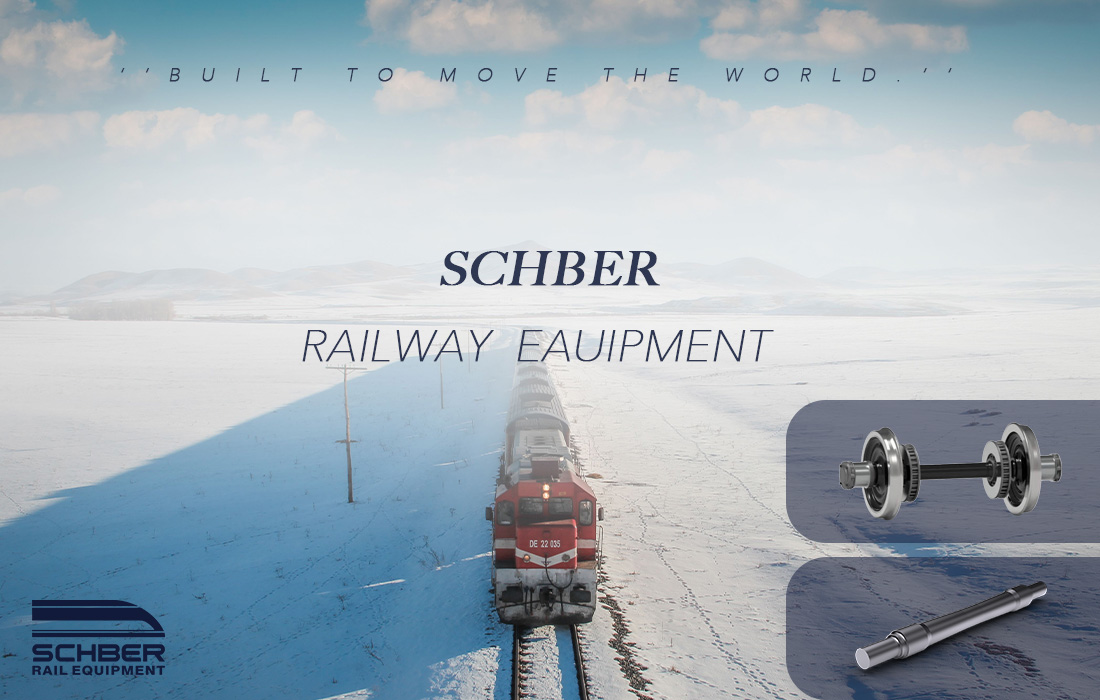
Railway locomotive axles are vital components of the locomotive’s running gear, performing essential functions such as connecting wheelsets, transferring loads, and supporting motive power transmission. During railway operations, axles must withstand complex, sustained loads arising from the locomotive’s own weight, tractive effort, braking forces, and track irregularities.
As railway transport trends toward higher speeds and heavier loads, the demands on the strength, reliability, and durability of locomotive axles have increased. High-performance axles help maintain stable locomotive operation, thereby enhancing the safety and efficiency of railway transport.
Fundamental Functions of Railway Locomotive Axles
Railway locomotive axles primarily connect wheels and other running gear components to form a complete wheelset system. During operation, the axle drives the wheels to rotate synchronously, enabling the vehicle to travel stably along the rails.
Axles not only bear the vehicle’s weight but also transmit tractive and braking forces. When the locomotive starts, accelerates, or brakes, the axle is subjected to significant forces; therefore, it must possess excellent strength and fatigue resistance.
During operation, the axle rotates continuously at high speeds. A stable structural design helps minimize operational vibration and improves the smoothness of the vehicle’s movement.
Structural Characteristics of Railway Locomotive Axles
Railway locomotive axles are typically manufactured from high-strength materials and precision-engineered to meet operational requirements. The axle structure must satisfy specific fit requirements for the wheel seat, axle journal, and other connection points.
The axle journal area connects to the bearing system and provides rotational support. The wheel seat area is designed for wheel mounting, ensuring a stable connection between the wheel and the axle.
An optimized axle structure improves load distribution and reduces localized stress concentrations, thereby extending the component’s overall service life.
The Role of Railway Locomotive Axles in the Wheelset System
The wheelset—comprising wheels and an axle—is a crucial part of the railway vehicle’s running gear. As the core connecting component of the wheelset, the axle directly influences the vehicle’s operational performance.
During train operation, the axle drives the wheels to rotate in unison and transmits the power generated by the locomotive to the track system. At the same time, the axle must withstand impact forces generated by the interaction between the rails and the moving vehicle.
A stable and reliable axle helps the wheelset maintain optimal operating conditions, reduces vibration and wear, and enhances the operational safety of the locomotive.
Performance Requirements for Railway Locomotive Axles
Railway locomotive axles must meet a range of performance requirements.
First, the axle requires high load-bearing capacity. Locomotives typically handle heavy traction tasks, meaning the axle must endure the stress of long-term, high-load operation.
Second, the axle requires good fatigue strength. Given the long distances covered by railway locomotives, axles undergo numerous cycles of rotational loading; therefore, they must maintain stable performance over the long term.
Furthermore, the axle requires high dimensional accuracy and superior surface quality. Precision machining ensures a proper fit between components—such as wheels and bearings—thereby improving overall operational efficiency.
Application Environments for Railway Locomotive Axles
Railway locomotive axles are widely used in electric locomotives, diesel-electric locomotives, heavy-haul freight locomotives, and other rail vehicles.
In heavy-haul rail transport, locomotives must pull massive loads. Axles are subjected to significant vertical loads and tractive forces over extended periods, placing higher demands on their strength and durability.
In high-speed operating environments, axles must maintain excellent dynamic stability, minimizing vibration and impact during operation to enhance the vehicle’s ride quality.
Development Trends for Railway Locomotive Axles
With the continuous advancement of modern railway technology, locomotive axles are evolving toward higher strength, lighter weight, and intelligent monitoring capabilities.
New materials and advanced manufacturing techniques are constantly improving axle performance, enabling them to adapt to increasingly complex operating environments. Meanwhile, intelligent monitoring technologies allow railway systems to track axle conditions in real-time, thereby improving maintenance efficiency.
In the future, railway locomotive axles will continue to evolve toward greater reliability, longer service life, and superior operational performance, providing more stable support for railway transportation.
Conclusion
Although the railway locomotive axle is a fundamental component of the locomotive’s running gear, it performs the critical tasks of connecting components, providing structural support, and transmitting power. From electric locomotives to heavy-haul freight locomotives, and from routine transport to long-distance operations, reliable railway locomotive axles play a pivotal role. Stable axle performance ensures the safe operation of locomotives and provides a solid foundation for modern railway transportation.