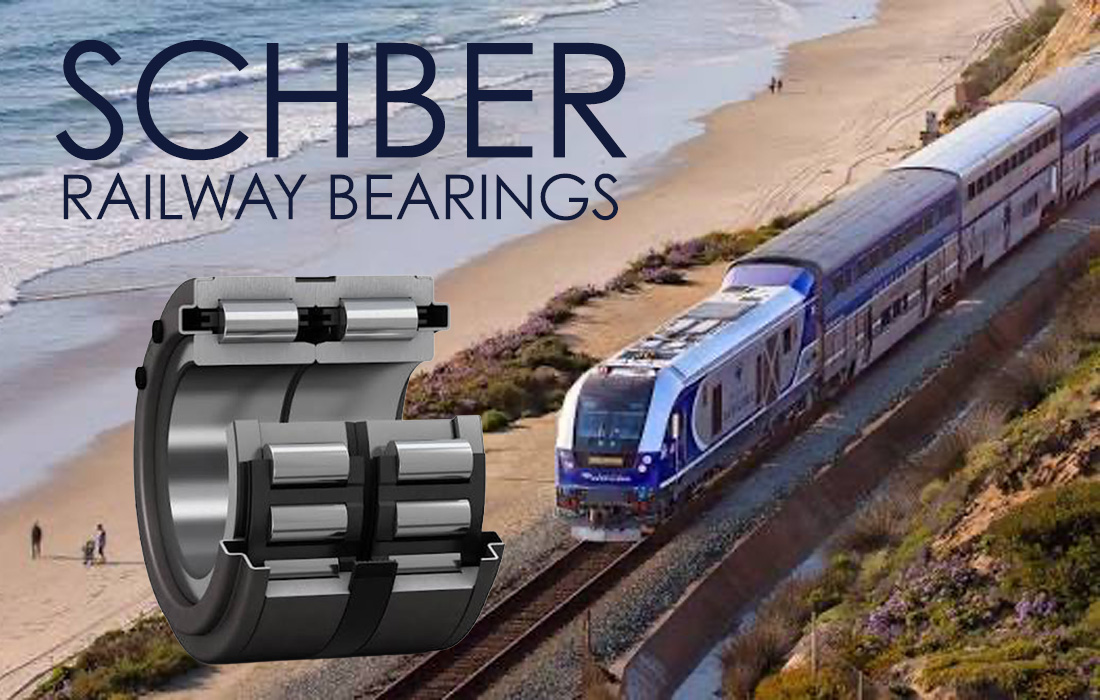
Railway bearings are critical rotating components in railway vehicles, primarily responsible for supporting axles, wheelsets, and drive shafts. They also minimize frictional losses during rotation, thereby helping the vehicle maintain stable operation.
As a railway vehicle travels, the axle rotates continuously. Bearings utilize rolling contact between rolling elements and raceways to keep friction generated by this rotational movement at a low level. Consequently, railway bearings enable the axle to rotate smoothly while bearing the load.
1. What components make up a railway bearing?
Railway bearings typically consist of an inner ring, an outer ring, rolling elements, and a cage. Some bearings also incorporate seals to meet the requirements of specific operating environments.
The inner ring usually fits onto the axle and rotates with it. The outer ring connects to the axle box or bearing housing, serving primarily to fix and support the assembly. Rolling elements are positioned between the two rings and roll along the raceways.
The cage serves to separate the rolling elements, maintaining proper spacing between them. This reduces friction between the rolling elements and improves the bearing’s operational stability.
2. How does rolling contact reduce friction?
Railway vehicles must withstand significant loads during operation. If the axle were to make direct contact with the bearing housing, substantial sliding friction would occur.Railway bearings utilize rolling elements to establish rolling contact, thereby reducing frictional resistance at the contact surfaces. Compared to sliding contact, rolling contact minimizes energy loss and reduces component wear.
Additionally, grease forms a lubricating film between the rolling elements and the raceways. This reduces direct metal-to-metal contact and helps regulate operating temperatures.
3. How do railway bearings support vehicle loads?
During operation, bearings must support loads transmitted from the vehicle body, bogies, and wheelsets. Since vehicle weights and operating conditions vary, the loads borne by the bearings differ accordingly.Axle box bearings generally must withstand substantial radial loads. At the same time, traversing curves, turnouts, and uneven track sections generates axial forces and impact loads.
Therefore, manufacturers must select an appropriate bearing configuration based on factors such as axle load, operating speed, and installation location.
4. How do different bearing configurations work?
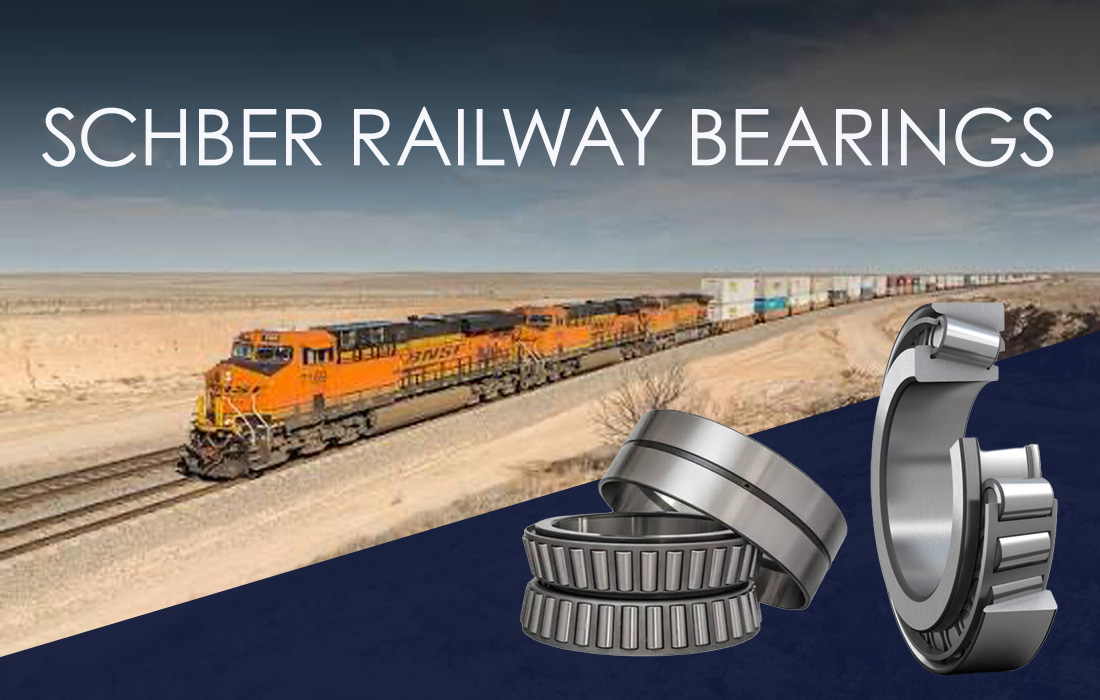
Railway bearings come in various structural configurations. Common products include cylindrical roller bearings, tapered roller bearings, and railway bearing units.
Cylindrical roller bearings typically offer excellent radial load-carrying capacity, making them suitable for certain high-speed and heavy-load applications. Tapered roller bearings can withstand both radial and axial loads simultaneously, making them ideal for operating conditions involving combined loads.
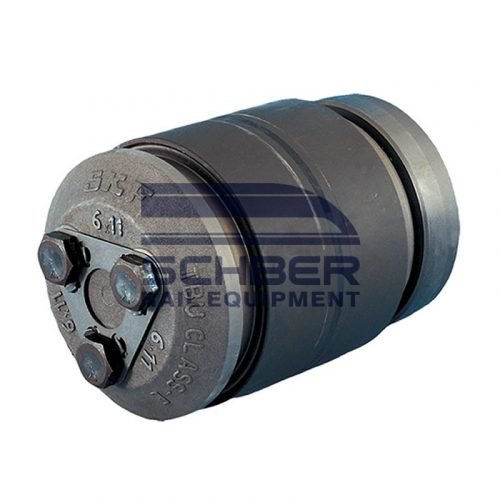
Railway bearing units integrate components such as the bearing itself, seals, and lubrication systems. This integration simplifies the installation process and enhances overall operational reliability.
5. What role does lubrication play during operation?
As railway bearings rotate continuously, friction occurs between the rolling elements and the raceways. This friction results in energy loss and heat generation.
Therefore, proper lubrication is crucial for railway bearings. Lubricating grease reduces friction at contact surfaces and minimizes wear on the raceways and rolling elements.
For bearings used in high-speed trains and electric multiple units (EMUs), high-speed operation places greater demands on lubrication. Manufacturers must select appropriate lubrication solutions based on rotational speed, temperature, and load conditions.
6. How do sealing structures protect the bearings?
Railway vehicles often operate in environments exposed to dust, rain, and moisture. If contaminants enter the bearing, they can accelerate wear on the raceways and rolling elements.
Consequently, railway bearings typically require reliable sealing structures. Seals prevent external contaminants from entering while helping to retain the grease inside the bearing.An effective seal design minimizes the risk of contamination and helps ensure the bearing maintains stable, long-term operation.
7. How does high-speed operation affect the bearings?
As train speeds increase, the rotational speed of the bearings rises accordingly. High-speed rotation increases frictional heat generation and imposes stricter requirements on rotational precision.Therefore, bearings for high-speed rail require precise control of internal clearance. Manufacturers must also optimize raceway precision, the quality of rolling elements, and the design of the cage.
Additionally, the performance of the lubricating grease influences the bearing’s temperature rise. Only through the proper coordination of these various factors can the bearings meet the demands of high-speed operation.
8. The complete operating process of railway bearings
Once the train starts moving, the axle drives the rotation of the bearing’s inner ring. Subsequently, the rolling elements roll along the raceways of both the inner and outer rings. Throughout this process, the bearing continuously supports the vehicle’s load. Grease reduces contact friction, the cage maintains proper spacing between the rolling elements, and the sealing structure blocks external contaminants.Consequently, railway bearings simultaneously perform functions such as rotational support, load transmission, friction control, and operational protection.
Summary
Railway bearings primarily utilize rolling contact to provide rotational support. Through the coordinated movement of the inner ring, outer ring, rolling elements, and cage, they reduce friction during axle rotation.
At the same time, lubrication and sealing structures further optimize the bearing’s operating conditions. Different vehicle applications require the selection of appropriate configurations based on speed, load, and installation location.
Therefore, while the fundamental operating principle of railway bearings is based on rolling contact, actual performance depends on various factors, including materials, precision, internal clearance, lubrication, and sealing. Proper design and selection enable more stable and reliable operation of railway vehicles.