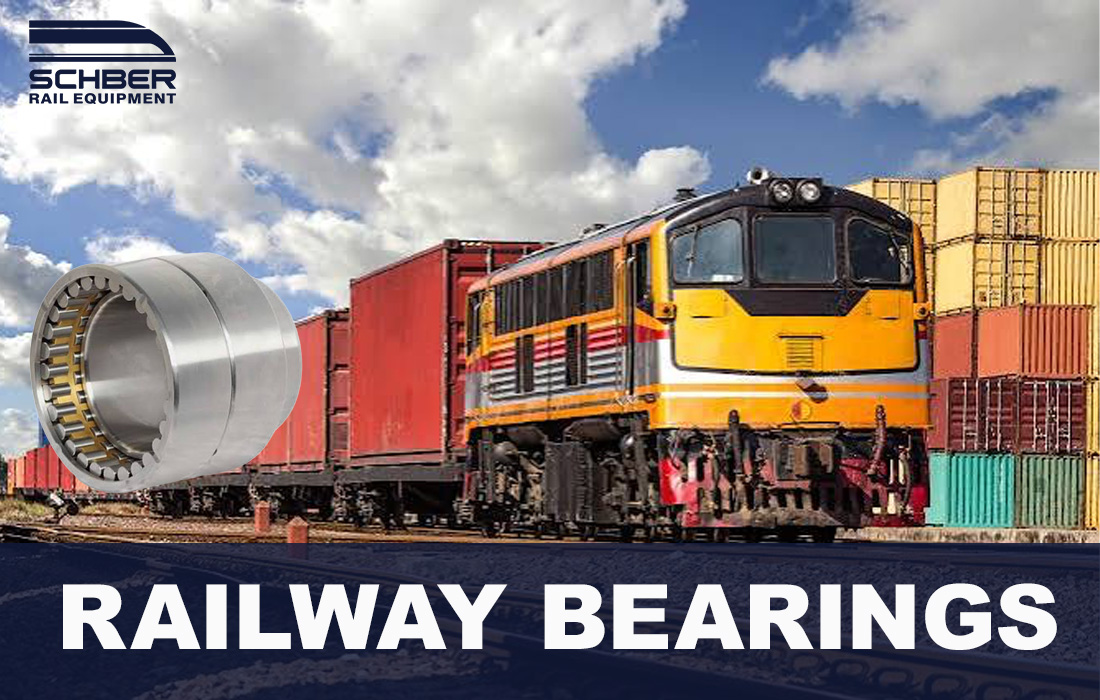
Railway bearings must withstand continuous rotation, heavy loads, and impacts from the track. During operation, they inevitably generate a certain level of vibration and noise. Effectively controlling these factors enhances the operational stability of railway vehicles.
The operational condition of bearings is critical for high-speed trains, subways, and urban rail vehicles. Abnormal vibration and noise can compromise passenger comfort and may indicate bearing wear or other issues. Consequently, manufacturers must control vibration and noise through various measures, including material selection, machining, assembly, lubrication, and maintenance.
What Causes Vibration in Railway Bearings?
Railway bearings consist primarily of rings, rolling elements, and cages. These components must maintain stable motion during operation. Machining errors on raceway surfaces can lead to periodic vibration, while variations in the size of rolling elements can also affect operational smoothness.
Improper installation is another source of increased vibration. For instance, an inadequate fit between the bearing and the axle can increase eccentricity and vibration during operation. Track irregularities also generate impact loads, which the bearings must withstand.
Where Does Railway Bearing Noise Come From?
Bearing noise is closely linked to vibration. Operational noise is generated when rolling elements make contact with the raceways; high surface roughness on the raceways can increase this noise.
Lubrication conditions also play a role; insufficient lubrication increases friction and can produce abnormal sounds. Cage design is another factor affecting operation, as a well-designed cage helps maintain the stable movement of rolling elements.
The Impact of Materials and Machining Precision on Vibration
Railway bearings require bearing steel of consistent quality. High-quality materials ensure superior strength and fatigue resistance, whereas inconsistent material quality can compromise long-term performance.
Machining precision is equally important. Manufacturers must strictly control ring dimensions, raceway accuracy, roundness, and surface roughness. Precision grinding minimizes irregular contact on raceway surfaces, thereby reducing vibration and noise.
Therefore, when sourcing railway bearings, overseas buyers should carefully evaluate a supplier’s material control and machining capabilities.
Lubrication Can Reduce Bearing Noise
Grease reduces friction between rolling elements and raceways. Proper lubrication also helps maintain stable operating temperatures for the bearings.Insufficient grease can increase friction and noise, while excessive grease may increase internal resistance. Therefore, manufacturers must select the appropriate grease and fill quantity based on the bearing’s structure, operating speed, and working temperature.
Lubrication strategies are particularly critical for high-speed railway bearings. Manufacturers must comprehensively consider rotational speed, load, and operating temperature.
Proper Installation Can Reduce Vibration
The quality of railway bearing installation directly affects operational performance. Factors such as fit precision, coaxiality, and installation force must be controlled during the process.
Installers must use appropriate tools; incorrect installation methods can cause bearing deformation or internal damage. The bearing’s rotation should also be checked after installation is complete.High installation precision helps ensure stable operation and minimizes abnormal vibration.
How Are Railway Bearing Vibration and Noise Detected?
Manufacturers use specialized testing equipment to detect bearing vibration, recording data such as vibration velocity, acceleration, and frequency.Signals at different frequencies help technicians analyze the bearing’s operating condition. Noise testing also allows manufacturers to assess the product’s operational quality.
For export bearings, manufacturers must determine testing protocols based on customer technical requirements. Comprehensive test data helps overseas buyers understand product performance.
How Can Railway Bearing Vibration and Noise Be Reduced?
Manufacturers should first select high-quality materials, then improve machining and assembly precision. Optimizing the internal structure can also enhance operational performance.
Internal clearance must meet design specifications; appropriate clearance allows the bearing to accommodate changes in temperature and load during operation.Additionally, manufacturers must select suitable lubrication strategies and sealing designs. Railway operators should also regularly monitor bearing conditions; detecting abnormal vibration early helps reduce the risk of serious failures.
How Should a Railway Bearing Supplier Be Selected?
When selecting a supplier, overseas buyers should focus on product quality and technical capabilities. A professional manufacturer should possess precision machining and bearing testing equipment.
Buyers can request information regarding material standards, machining precision, lubrication strategies, and vibration test data. Manufacturers should also provide complete technical specifications and quality records. Selecting a supplier with experience in railway bearing production helps customers secure more consistent product quality and reduce long-term maintenance costs.
Conclusion
The vibration and noise of railway bearings are influenced by factors such as materials, machining precision, lubrication, installation, and the operating environment. High-precision manufacturing minimizes abnormal vibration, while proper lubrication reduces friction and operating noise. Correct installation also enhances the operational stability of the bearings.
For overseas buyers, it is crucial to select railway bearing manufacturers that possess precision manufacturing and testing capabilities. Consistent product quality improves the operational reliability of railway vehicles and lowers long-term maintenance costs.