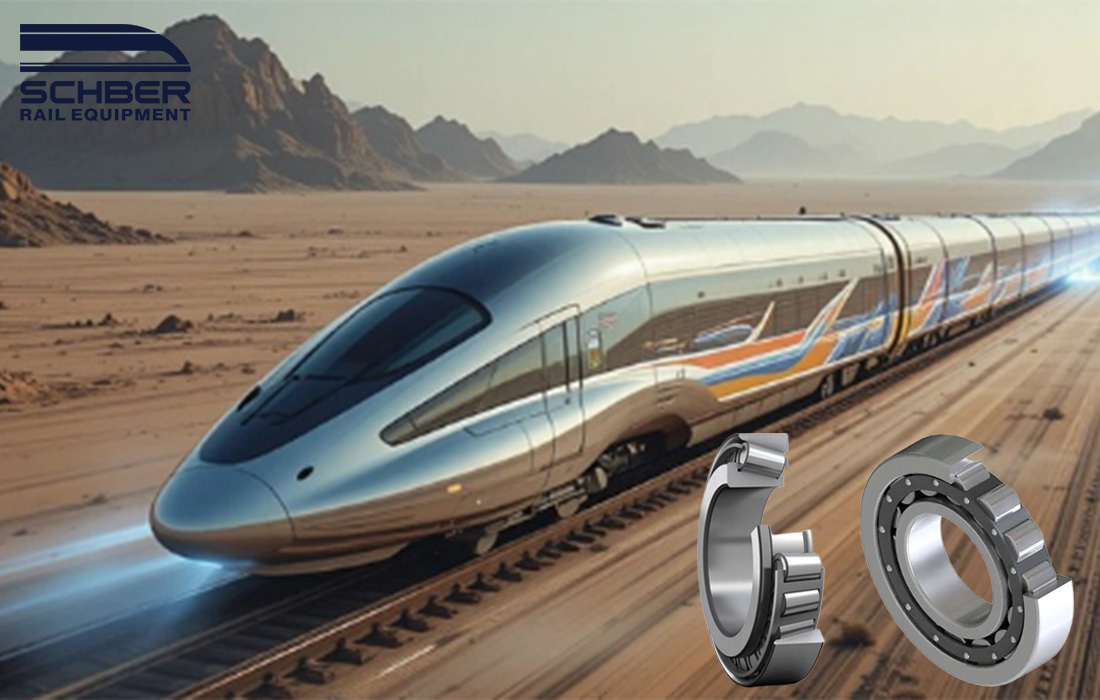
Railway traction motor bearings are critical components of rail transit equipment. They primarily support the motor’s rotating shaft and withstand the radial and axial loads generated during operation.
Railway vehicles operate for extended periods, and traction motors spin continuously at high speeds. Consequently, the bearings must maintain stable operating conditions. High-performance bearings reduce friction as well as vibration and noise during operation.
Key Functions of Railway Traction Motor Bearings
When the traction motor is running, the rotor spins continuously at high speed. Bearings support the rotor and maintain the operational precision of the rotating shaft.
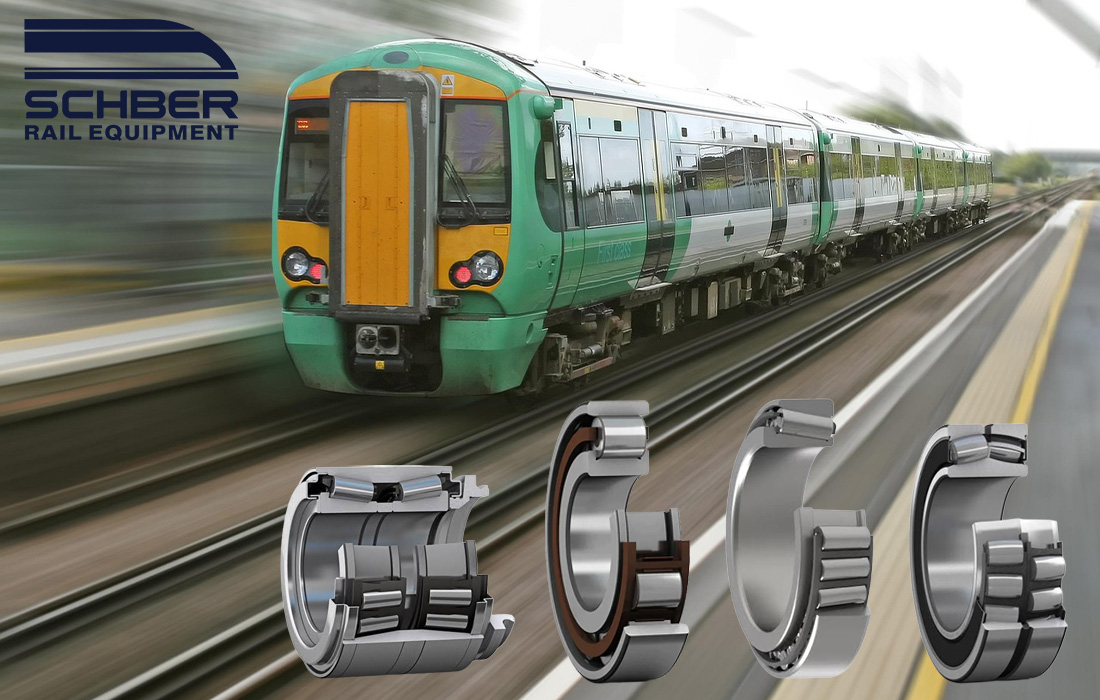
Bearings typically consist of an inner ring, an outer ring, rolling elements, and a cage. Different bearing structures offer varying load-carrying capacities and operational characteristics. In practice, the appropriate bearing structure must be selected based on the motor’s specific parameters.
Railway vehicles are also subject to frequent starting and stopping, as well as impacts from the track. Bearings must withstand loads from various directions when the vehicle navigates curves, switches, or complex track sections; therefore, maintaining excellent stability is essential.
Performance Requirements for Railway Traction Motor Bearings
Railway traction motor bearings must meet rigorous performance standards.
First, the bearings require high load-carrying capacity. Traction motors generate continuous loads during prolonged operation, and the bearings must maintain stable performance under these conditions.
Second, the bearings require high rotational precision. Proper dimensional accuracy and fit help minimize vibration.
Temperature control is equally important. Traction motors generate heat during operation, so bearings must function correctly within a specific temperature range.
Lubrication performance also affects bearing lifespan. Appropriate lubrication reduces friction and helps lower operating temperatures.
Key Factors in Selecting Railway Traction Motor Bearings
Selecting the right bearing requires an understanding of the motor’s actual parameters.
Common parameters include the bearing’s inner diameter, outer diameter, width, rotational speed, and load. Installation space and the operating environment must also be considered.
For high-speed operating conditions, rotational performance is a priority. For high-load conditions, load-carrying capacity is the primary concern.
Railway vehicles may also be exposed to vibration, dust, and moisture over long periods. Therefore, sealing performance and lubrication methods must be selected based on the actual operating environment. Different types of rail transit equipment have distinct characteristics. The traction motor structures in electric locomotives, electric multiple units (EMUs), metro trains, and urban rail vehicles may vary; therefore, bearing selection must be tailored to the specific equipment.
Application of Railway Traction Motor Bearings
Railway traction motor bearings are used in a wide range of rail transit equipment.
Electric locomotives require bearings that support long-term traction motor operation. EMUs require bearings capable of withstanding high operating speeds. Metro vehicles require bearings suited to frequent start-stop cycles and the specific operating environments of urban rail systems.
An appropriate bearing design helps ensure the smooth operation of the traction motor. Stable bearing performance also contributes to reduced mechanical losses.
During long-term operation, it is essential to monitor bearing temperature, vibration, noise, and lubrication status. Regular inspections allow for the early detection of anomalies and help mitigate operational risks.
Maintenance of Railway Traction Motor Bearings
Bearing maintenance should be carried out based on the equipment’s operating conditions.
First, bearing temperature must be checked regularly. If an abnormal temperature rise occurs, the cause must be analyzed promptly.
Second, attention should be paid to operating noise and vibration. Abnormal bearing wear often manifests as noticeable changes in equipment operation.
Lubrication status also requires regular inspection. Insufficient lubrication increases friction, while excessive lubrication can also adversely affect bearing performance.
Proper maintenance practices can extend the service life of bearings and help ensure the stable operation of railway traction equipment. Keywords for Railway Traction Motor Bearings