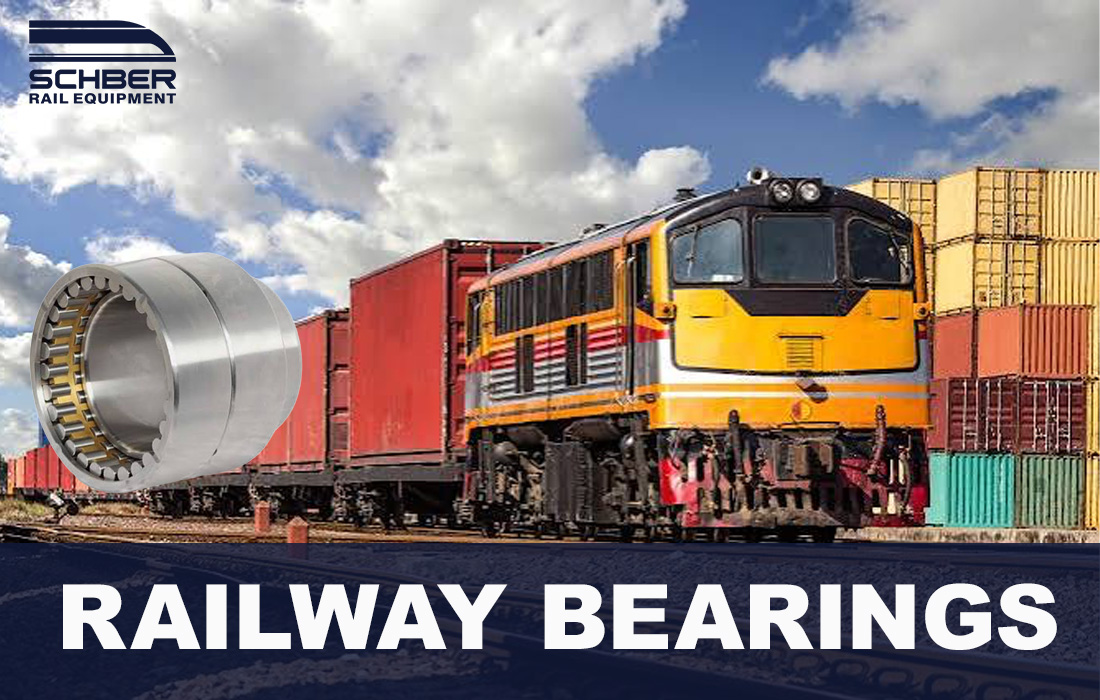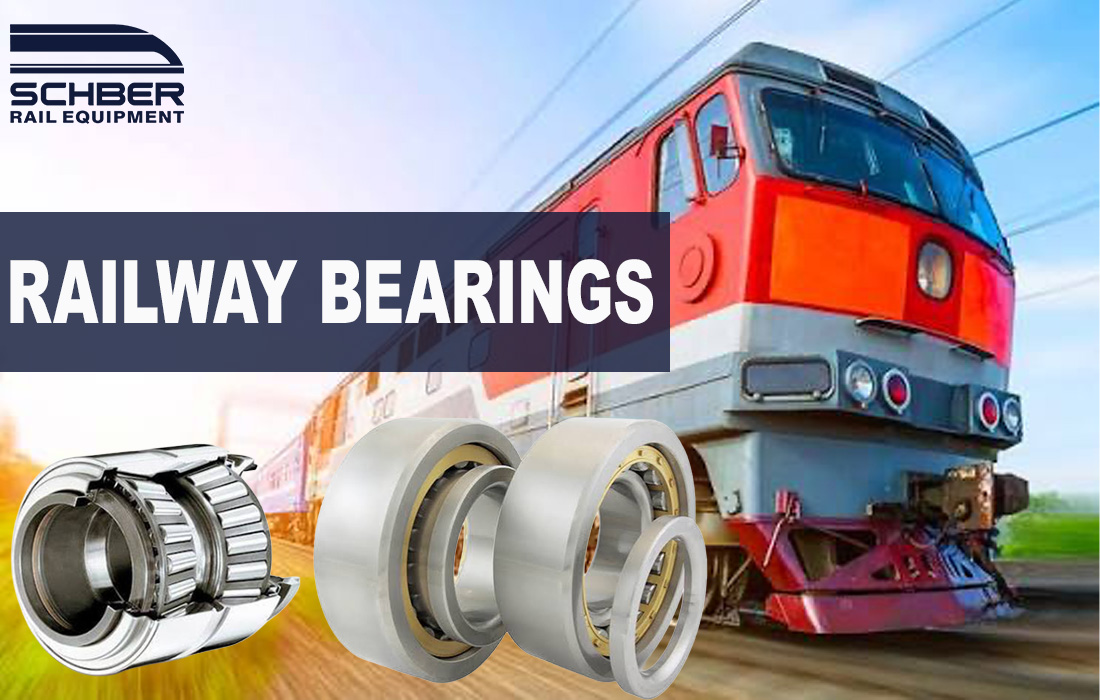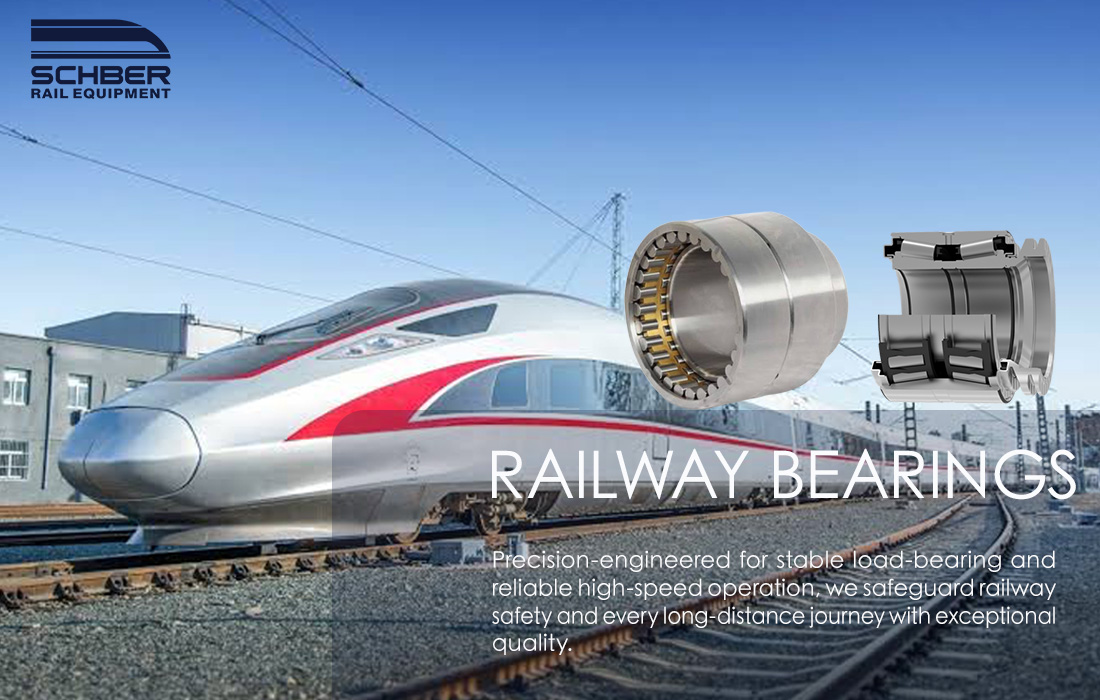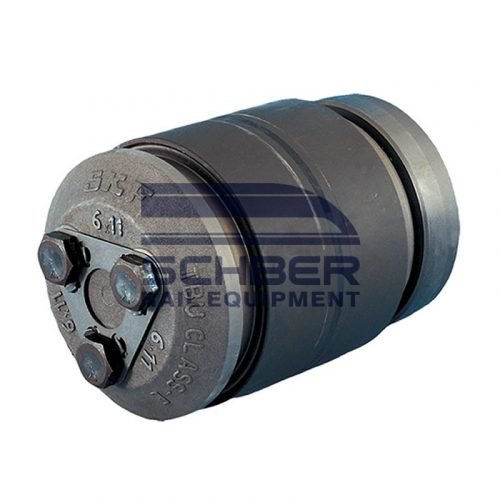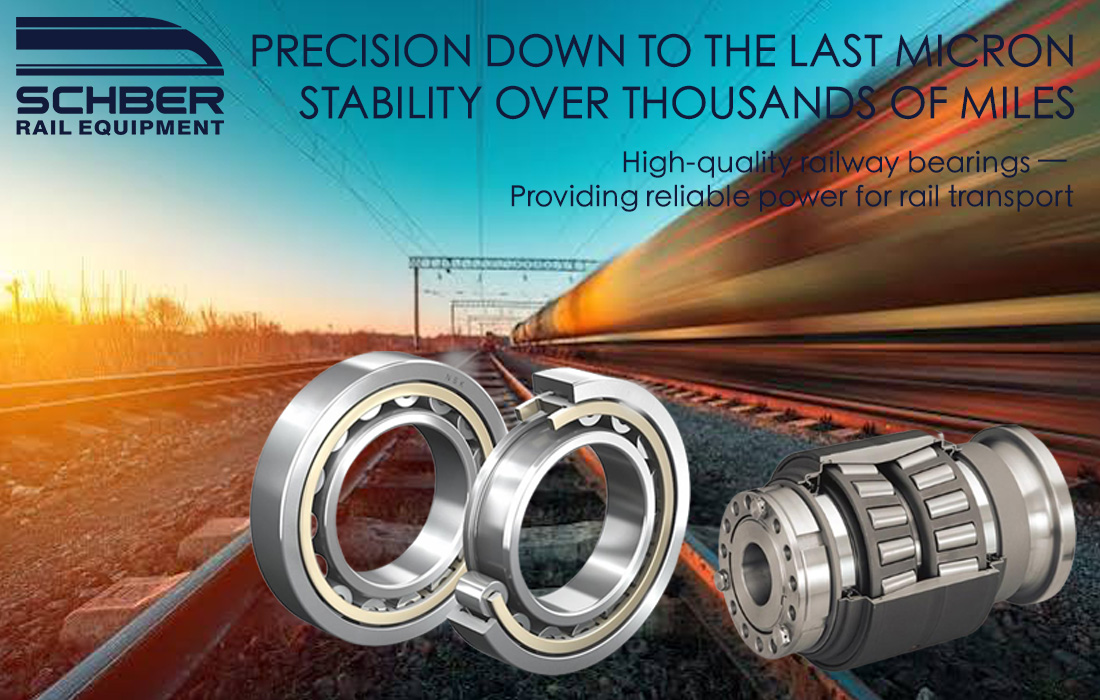
Railway bearings are critical rotating components in railway vehicles. They primarily support axles, wheelsets, traction motors, and gear transmission systems. Different railway vehicles operate at varying speeds and loads and feature distinct structural designs; consequently, they require specific types of railway bearings tailored to their needs.
1. High-Speed Railway Vehicles
High-speed rail is a major application area for railway bearings. These vehicles operate at high speeds for extended periods, requiring bearings that maintain stable rotational performance.
Bearings for high-speed trains are primarily used in axle boxes, traction motors, and gearboxes. Axle box bearings support the operation of the wheelsets; traction motor bearings support the motor rotor; and gearbox bearings support power transmission components.High-speed railway bearings must exhibit excellent high-speed performance, low temperature rise, low vibration, and a long service life.
2. Electric Multiple Units (EMUs)
EMUs encompass a variety of high-speed and intercity railway vehicles. Bearings for EMUs are widely used in bogies and traction systems.EMU axle box bearings bear the loads generated by wheelset operation. Traction motor bearings support the high-speed rotation of the motor, while gearbox bearings handle the radial and axial loads involved in power transmission.Bearing selection for EMUs is based on vehicle speed, load requirements, and available installation space.
3. Electric Locomotives
Electric locomotives rely primarily on electrical energy for traction. Bearings in these locomotives are found in the wheelsets, traction motors, and gear transmission systems.Locomotive axle box bearings must withstand heavy vehicle loads. Traction motor bearings must accommodate continuous high-speed rotation, and gearbox bearings must handle complex loads during power transmission.Bearings for electric locomotives typically prioritize load-carrying capacity, durability, and operational stability.
4. Diesel-Electric Locomotives
Diesel-electric locomotives are powered by diesel engines and feature complex power and transmission systems.Railway bearings are used in the wheelsets, traction motors, transmission units, and auxiliary equipment of these locomotives. Different installation locations require bearings with specific structural designs.
The operating environment for diesel-electric locomotives may involve vibration, temperature fluctuations, and dust; therefore, the bearings require excellent sealing, lubrication, and durability characteristics.
5. Railway Passenger Cars
Railway passenger cars are primarily responsible for transporting passengers. While standard passenger cars typically operate at lower speeds than high-speed electric multiple units (EMUs), they still require stable and reliable bearings.Bearings for passenger cars are mainly used in wheelsets and bogie systems. Axle box bearings support the primary loads during vehicle operation.Bearings for passenger cars must balance load-carrying capacity, operational stability, and service life.
6. Railway Freight Cars
Railway freight cars transport coal, ore, grain, steel, and other goods. Some heavy-haul freight cars feature high axle loads.Freight car bearings must withstand significant radial loads and operational impacts. They are primarily used in wheelset and axle box systems.Bearings for heavy-haul rail applications prioritize load-carrying capacity, impact resistance, wear resistance, and long service life.
7. Urban Rail Vehicles
Subways, light rail systems, and intercity trains also require a large number of railway bearings. Urban rail vehicles typically undergo frequent starting and braking.Bearings for subways are primarily used in bogies, axle boxes, traction motors, and gearboxes. Frequent operation increases the number of duty cycles for the bearings.Consequently, bearings for urban rail transit require stable operational performance and excellent durability.
8. Tailored Bearings for Different Railway Vehicles
Bearing requirements vary depending on the type of railway vehicle.High-speed trains and EMUs prioritize high-speed operational performance.Electric and diesel locomotives prioritize the reliable operation of the powertrain.Freight cars prioritize heavy-load capacity and impact resistance.Passenger cars prioritize long-term stable operation.
Subway and urban rail vehicles prioritize durability in environments involving frequent starting and stopping.Therefore, selecting the right railway bearing requires a comprehensive assessment based on vehicle type, installation location, operating speed, load, temperature, and lubrication and sealing conditions.
Conclusion
Railway bearings are widely used in high-speed trains, EMUs, locomotives, passenger cars, freight cars, subways, and urban rail vehicles. Axle box bearings, traction motor bearings, and gearbox bearings are common types of railway bearings.
For railway vehicle manufacturers, maintenance providers, and bearing purchasers, understanding the operational characteristics of different vehicles helps in selecting the appropriate railway bearings. Suitable bearing products can enhance operational stability and help reduce maintenance costs.