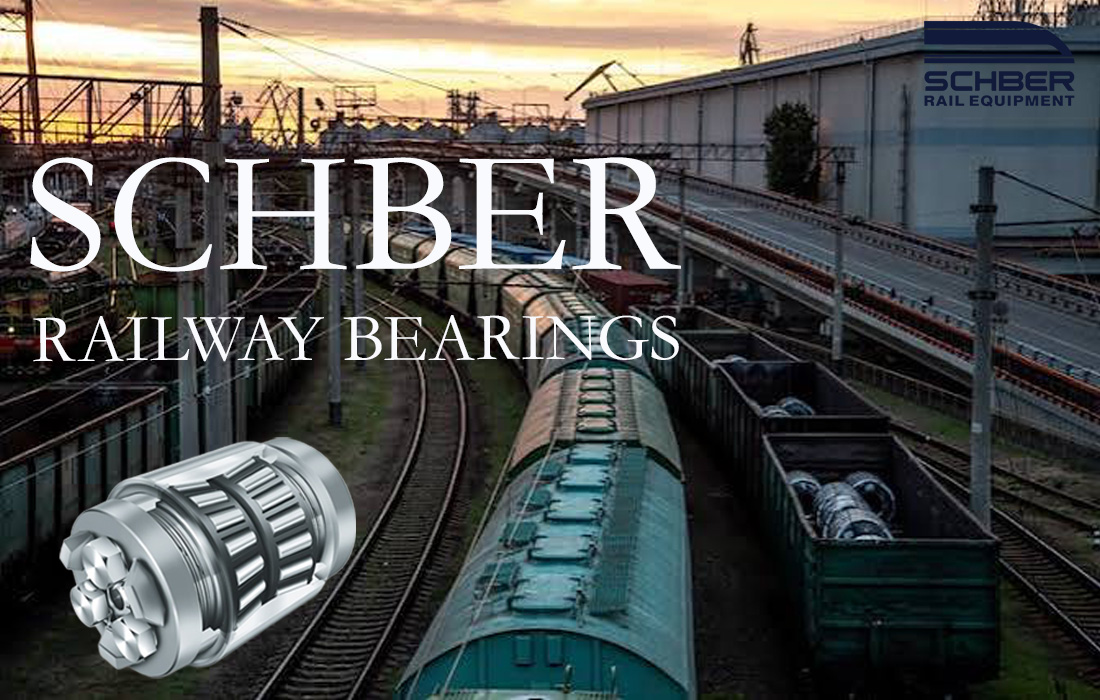
Railway bearings are critical safety components of railway vehicles. They are subjected to high-speed rotation, vehicle loads, and track-induced impacts over long periods. Consequently, manufacturers must control product performance through rigorous quality standards.
Quality standards for railway bearings address not only dimensional accuracy but also materials, heat treatment, fatigue life, rotational accuracy, and sealing performance. Manufacturers must also align technical requirements with the specific needs of different railway vehicles and operational scenarios.
1. Dimensional Accuracy Standards
Dimensional accuracy is a fundamental metric for railway bearings. Inner diameter, outer diameter, and width must comply with design specifications. Furthermore, the bearings must maintain proper fits with the axle and axle box.
Significant dimensional deviations can compromise installation integrity. Therefore, manufacturers must employ precision measuring equipment for inspection and control dimensional variations during the machining process.
2. Material Quality Standards
Railway bearings must withstand cyclic loading over extended periods. Consequently, the bearing material requires excellent strength, toughness, and fatigue resistance.
Manufacturers must strictly control the chemical composition of the bearing steel and inspect the material’s internal microstructure and non-metallic inclusions.
High-quality raw materials provide the foundation for reliable, long-term bearing operation.
3. Heat Treatment Quality Standards
Heat treatment directly influences a bearing’s hardness and wear resistance. An appropriate heat treatment process improves the material’s microstructure and enhances fatigue strength.
Manufacturers must control heating temperatures, holding times, and cooling processes, while also verifying the resulting hardness and microstructure.
Additionally, manufacturers must monitor dimensional changes caused by the heat treatment process.
4. Machining Accuracy Standards
Railway bearings require high machining precision. Raceway surfaces, inner and outer diameters, and end faces must all meet design specifications.Rolling elements must also maintain consistent dimensions. Precision machining minimizes vibration and noise during operation.Therefore, manufacturers must strictly control grinding and finishing processes.
5. Internal Clearance Standards
Internal clearance affects temperature rise and operational stability. Insufficient clearance can lead to increased friction and heat generation.Conversely, excessive clearance may result in increased vibration and impact loads. Manufacturers must therefore carefully control clearance based on the bearing type and operating conditions.
Clearance control is particularly critical for high-speed railway bearings. 6. Standards for Rotational Accuracy and VibrationRailway vehicles require smooth, stable operation; therefore, bearings must exhibit high rotational accuracy and low vibration levels.Manufacturers must monitor the rotational characteristics of the bearings while also paying close attention to operating noise and vibration values.
Bearings for high-speed trains and electric multiple units (EMUs) generally face stricter requirements regarding operational stability.
7. Fatigue Life Standards
Railway bearings are subjected to long-term cyclic loads, making fatigue life a critical quality indicator.Manufacturers must design for service life based on material, structural, and load considerations, and verify product performance through relevant testing.Adequate fatigue life helps reduce the risk of premature bearing failure.
8. Sealing Performance Standards
Railway vehicles often operate in challenging environments where dust, rain, and moisture can affect the internal condition of the bearings.Consequently, bearings require effective sealing capabilities. Manufacturers must verify the integrity and fit of the sealing structure.Effective sealing minimizes the ingress of contaminants and reduces the risk of grease leakage.
9. Lubrication Quality Standards
The type of grease used directly impacts bearing performance; manufacturers must select grease that meets specific operating conditions.Precise control of the grease fill quantity is also essential. Insufficient grease increases friction, while excessive grease can lead to a rise in operating temperature.Therefore, grease type, cleanliness, and fill quantity must be strictly controlled.
10. Finished Product Inspection Standards
After assembly, bearings undergo comprehensive inspection, typically covering dimensions, internal clearance, rotational accuracy, and visual appearance.Manufacturers may also conduct tests for vibration, noise, temperature rise, and sealing performance based on specific product requirements.Thorough quality inspection enables manufacturers to promptly identify any anomalies in the production process.
11. Railway Industry Standards and Certification
Compliance with relevant railway industry standards is essential, as technical specifications vary by country and region.For instance, the European railway market typically adheres to the EN series of standards, while the international market may involve ISO standards.Additionally, some railway projects may require adherence to technical specifications set by the vehicle manufacturer. Suppliers exporting railway bearings must therefore confirm the requirements of the target market and the specific vehicle project.
Summary
Quality standards for railway bearings encompass a wide range of factors. Key aspects include dimensional accuracy, material quality, heat treatment, machining precision, internal clearance, rotational accuracy, fatigue life, sealing performance, and lubrication quality.At the same time, manufacturers must also adhere to relevant railway industry standards and customer technical specifications.
Therefore, the quality of railway bearings cannot be assessed based on a single indicator alone. Manufacturers need to establish a comprehensive quality control system and implement full-process management covering raw materials, production techniques, and finished products. This ensures the bearings meet the operational requirements of various railway vehicles, such as high-speed trains, electric multiple units (EMUs), locomotives, and freight wagons.