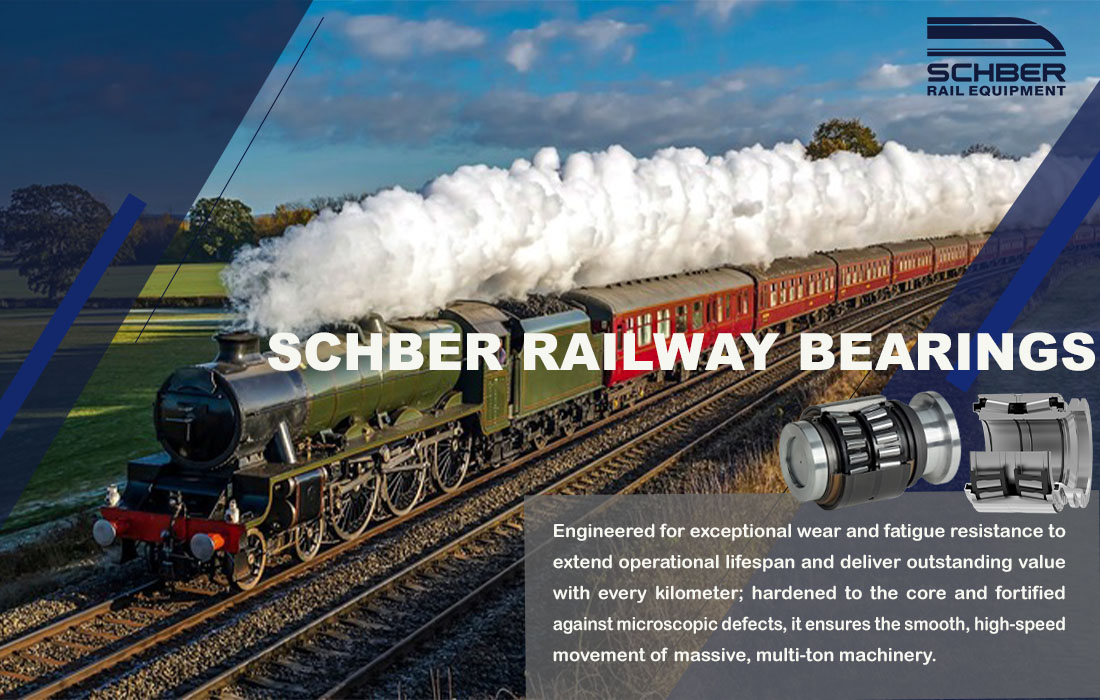
What types of train bearings are there? A detailed look at railway bearing types, common models, and bogie installation locations. In rail transit equipment, railway bearings are core components essential for ensuring the high-speed, safe operation of trains. Whether it is a high-speed EMU (Electric Multiple Unit) traveling at 350 km/h or a heavy-haul freight train carrying 10,000 tons, robust power transmission and smooth operation rely on the support of precision bearings. This article provides a comprehensive analysis of the railway bearing types commonly used on trains, key model specifications, and their specific installation locations on the bogie, helping you quickly grasp the technical essentials of rail transit bearings.
I. Core Installation Location: Bogie Analysis.
The core of a train’s undercarriage is known as the bogie. The vast majority of railway bearings are installed in two key areas of the bogie: Axlebox Location: Situated at both ends of the wheel axle, connecting the wheelset to the bogie. Core Function: Bears the entire weight of the car body and the alternating impact loads during operation; it is the “lifeline” for ensuring operational safety. Traction Drive System Location (Gearbox & Traction Motor): Installed inside the traction motor and reduction gearbox located beneath the bogie. Core Function: Efficiently and smoothly transmits power from the motor to the wheelset to drive the train forward.
II. Common Railway Bearing Types and Classic Models.
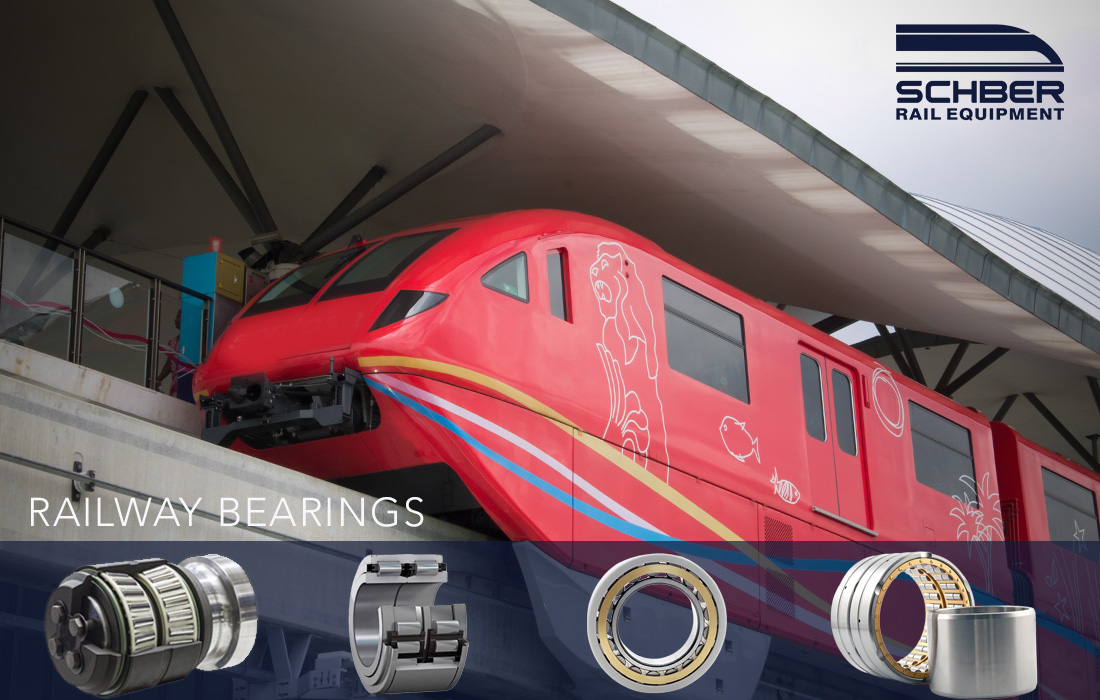
Depending on installation location and load requirements, railway bearings are primarily categorized into two mainstream structural types: cylindrical roller bearings and tapered roller bearings.
1. Axlebox Bearings
Axlebox bearings typically utilize pre-lubricated, sealed bearing units, offering extremely high reliability and long maintenance intervals.
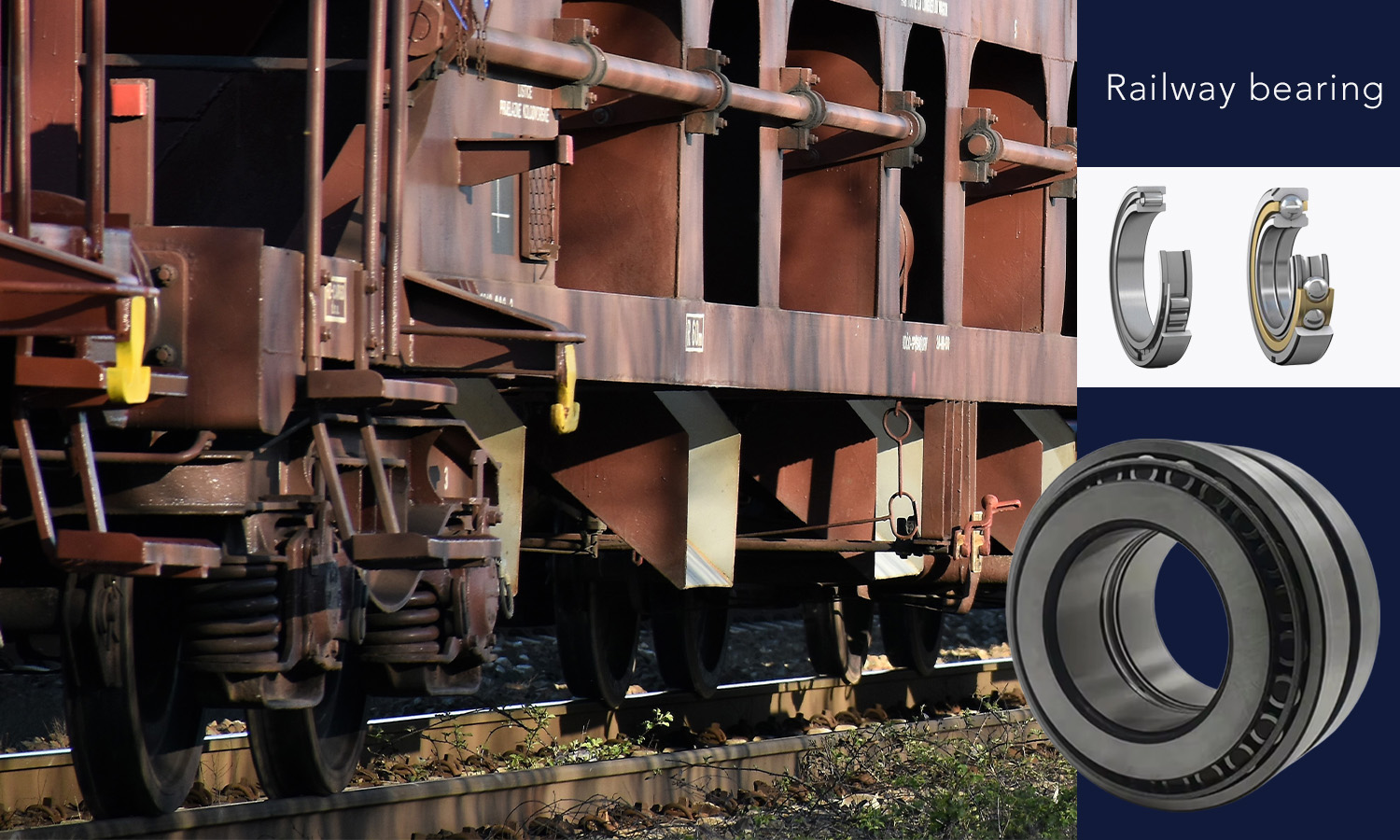
① Double-row cylindrical roller bearing units (primarily used in high-speed EMUs and urban rail/subway systems). Performance Characteristics: Extremely high radial load capacity and high limiting speeds; allows for slight axial movement of the axle (accommodating thermal expansion and contraction). Typical Models and Series: FAG TAROL Series: e.g., TAROL 130/230 (130mm inner diameter), TAROL 150/250. Axle box models for Chinese standard EMUs (e.g., 352226X2-2RZ): Widely used in the axle boxes of 350 km/h high-speed trains such as the “Fuxing” series.
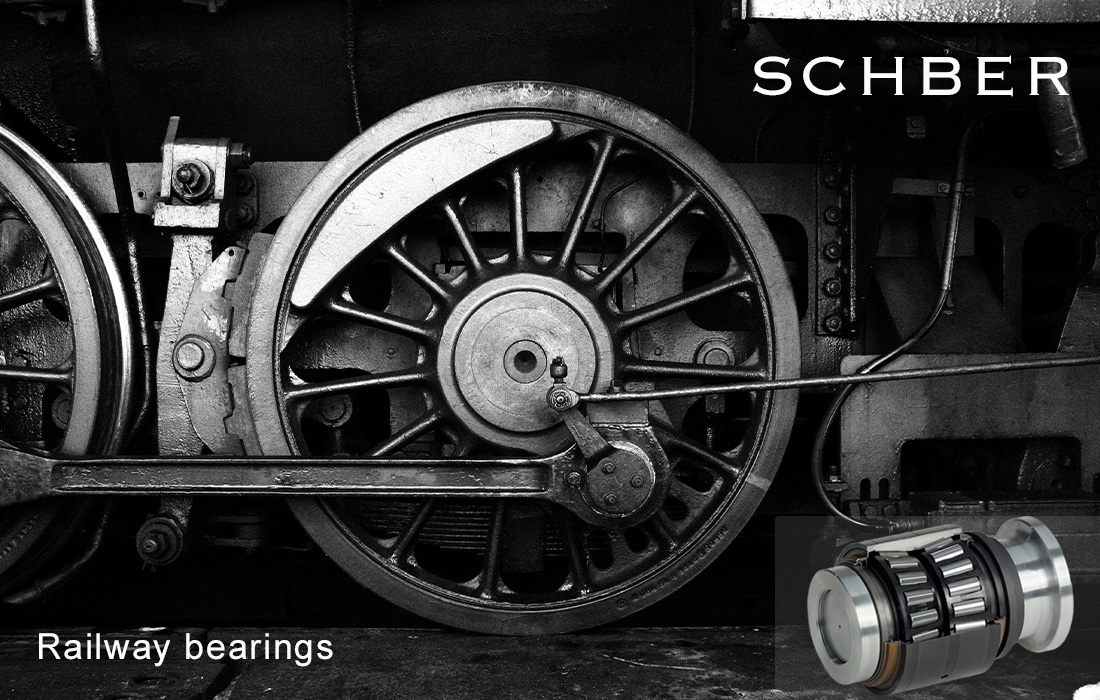
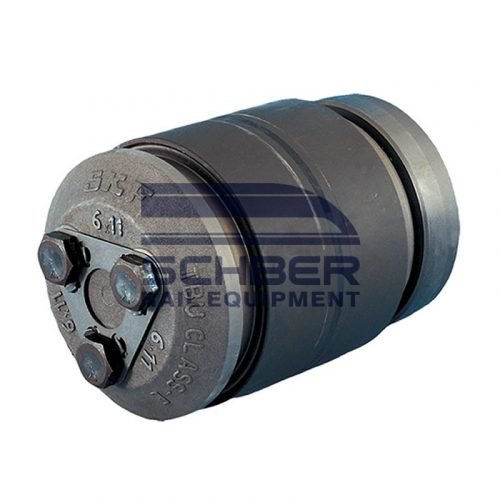
② Double-row tapered roller bearing units (TBU) (primarily for heavy-haul freight wagons and conventional-speed passenger coaches)—performance characteristics: capable of simultaneously withstanding massive radial and bidirectional axial loads, with exceptionally high overall rigidity. Typical models and series (adhering to AAR North American railway standards or metric specifications): AAR Class E (6″ × 11″) and Class F (6 ½” × 12″): Widely used in my country’s 10,000-tonne heavy-haul freight wagons and coal transport lines featuring high axle loads. Domestically produced 353100X2 series: Double-row tapered roller bearing units commonly used in heavy-haul freight wagons.
2. Traction motor and gearbox bearings (powertrain bearings):
Deep-groove ball bearings / insulated cylindrical roller bearings (motor bearings)—installed at both ends of traction motors in electric locomotives or EMUs; designed for high rotational speeds and typically featuring outer-ring insulation to prevent electrical erosion. Heavy-duty cylindrical/tapered roller bearing assemblies (gearbox bearings)—installed within reduction gearboxes to withstand complex, alternating loads generated by gear meshing.
III. Quick Reference Table:
Railway Bearing Types and Installation Locations | Installation Location (Bogie Component) | Common Railway Bearing Types | Typical Models/Series | Axlebox (High-speed EMU/Urban rail wheelset ends) | Double-row cylindrical roller bearing units | TAROL 130/230, 352226 series | Axlebox (Heavy-haul freight/Standard-speed passenger car wheelset ends) | Double-row tapered roller bearing units (TBU) | AAR Standard Class E / Class F | Traction Motor (Rotor ends) | Deep-groove ball bearings / Insulated cylindrical roller bearings | High-end precision motor bearings | Gearbox (Reduction gear shaft assembly) | Cylindrical/Tapered roller bearing combinations | Heavy-duty gearbox bearings |
IV. Conclusion and Procurement/Customization
As the “joints” of rail transit systems, the manufacturing of railway bearings involves multiple rigorous processes, such as heat treatment of high-hardness materials, wire-cut EDM splitting, and high-precision internal/external cylindrical grinding. Understanding train bearing types and models not only facilitates accurate bearing selection and replacement but also provides a solid safety foundation for rail transit operations and maintenance.