Railway vehicles generate significant heat during operation. Components such as traction motors, converters, and electrical equipment require stable cooling systems, making cooling fans essential auxiliary equipment for railway vehicles.
Within these cooling fans, bearings play a vital role in supporting the rotating shaft and ensuring rotational stability. During prolonged high-speed operation, bearings must withstand continuous rotation, vibration, and temperature fluctuations.
Why Do Railway Cooling Fans Require Reliable Bearings?
Railway vehicles often operate for extended periods. Since some equipment requires continuous operation, the cooling fans must also maintain stable performance.
Bearing performance directly affects the fan’s rotation. Issues such as wear, inadequate lubrication, or abnormal vibration can impair fan operation and, consequently, compromise the cooling efficiency of the associated equipment.
Therefore, the selection of bearings for railway cooling fans typically takes the following factors into account:
Fan rotational speed
Bearing load
Operating temperature
Vibration conditions
Lubrication conditions
Installation space
Service life
Designs vary across different vehicle models and cooling systems; consequently, bearing models and configurations must be selected based on the specific equipment requirements.
High-Speed Operation Places Higher Demands on Bearings
As railway vehicle speeds increase, the associated rotating components face more rigorous demands.Cooling fan bearings must maintain excellent stability during high-speed rotation. Factors such as dimensional accuracy, internal clearance, lubrication conditions, and installation quality all influence actual operational performance.Furthermore, the operating environment for railway vehicles is not constant; vehicles traverse diverse routes and climatic conditions while being subjected to continuous mechanical vibration.These factors must be considered during bearing selection and maintenance.
Key Trends in the Railway Bearing Industry
Current developments in railway bearing technology place increasing emphasis on reliability, service life, condition monitoring, and maintenance efficiency.Traditional scheduled maintenance practices are increasingly being integrated with condition monitoring technologies. By analyzing operational data—such as temperature and vibration—maintenance personnel can detect anomalies at an earlier stage.
This is particularly crucial for railway vehicles. Early detection of bearing irregularities helps reduce unexpected breakdowns and enhances overall operational reliability.Technologies related to materials, heat treatment, sealing, and lubrication also significantly impact bearing performance, with different application scenarios requiring tailored technical solutions. Railway bearings must be selected based on actual operating conditions.Not all railway bearings share the same design.
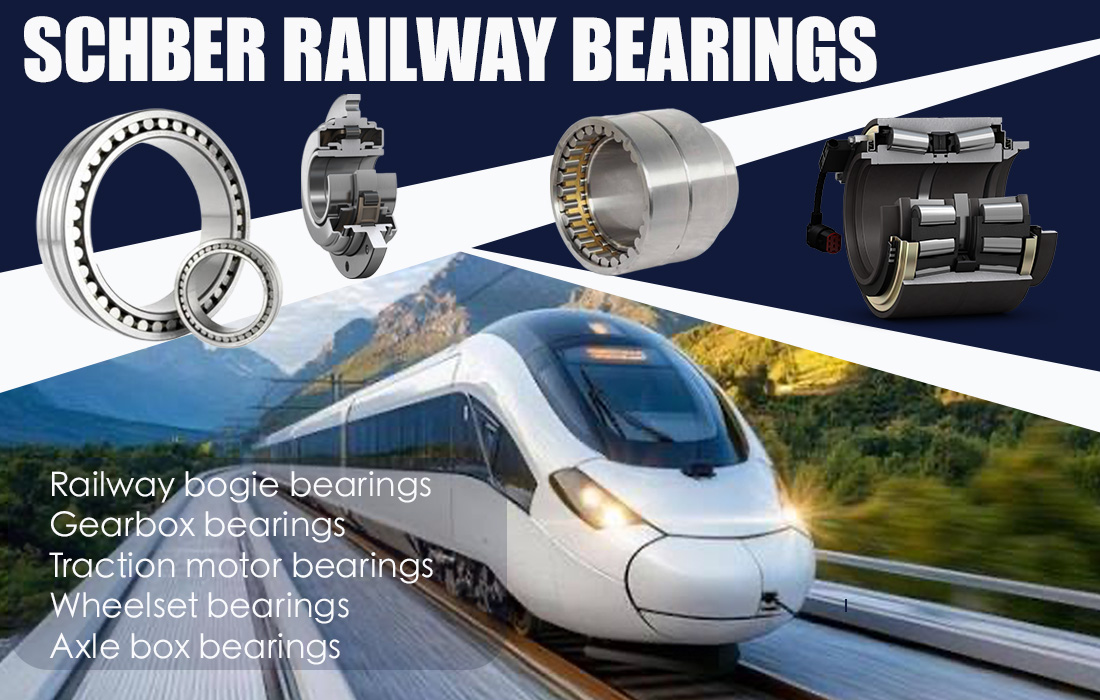
Bearings for axle boxes, traction motors, gearboxes, and cooling fans operate in different environments. They are subject to varying loads, rotational speeds, and service conditions.Therefore, when selecting railway bearings, one cannot rely solely on dimensions or model numbers; actual operating conditions are equally critical.
For railway equipment manufacturers and maintenance providers, a precise understanding of equipment parameters facilitates the selection of the most suitable bearing products.
Evolution of the Railway Bearing Market
As railway transport and rail transit technologies advance, there is an increasing demand for reliability in the critical components of railway vehicles.Although bearings are fundamental components, they directly impact the operational status of rotating equipment. Consequently, they remain a key focus within the rail transit industry.
For bearing suppliers, success depends not only on the product itself but also on a thorough understanding of the application requirements for various types of railway equipment.We supply relevant railway bearing products and consult with clients based on the specific models, dimensions, and application conditions they provide.