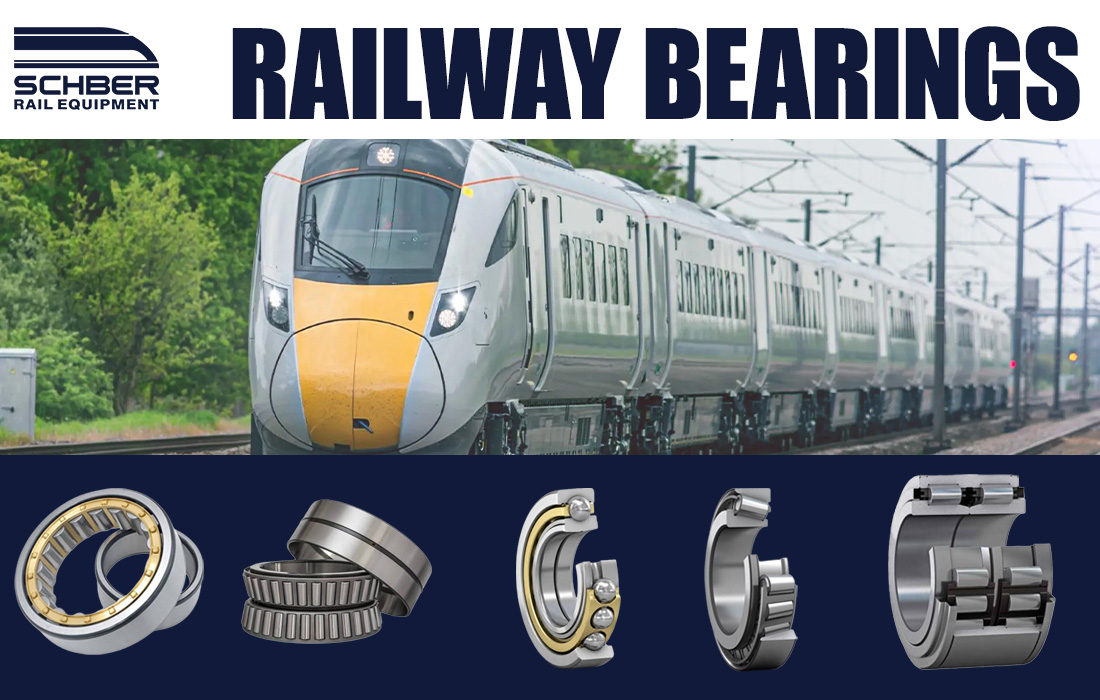
Located between the axle and the axle box, the axle box bearing is a critical component of a railway vehicle’s running gear. It primarily supports the rotation of the wheelset and axle while helping to maintain stable vehicle operation. During operation, these bearings must withstand the vehicle’s weight, operational vibrations, and loads generated under various service conditions.
Railway vehicles subject bearings to forces acting in different directions during starting, acceleration, braking, and cornering. High-speed rail operations also impose requirements for higher rotational speeds. Consequently, the selection of axle box bearings must be based on factors such as vehicle structure, operating speed, load, and the working environment.
Primary Functions of Railway Axle Box Bearings
Wheelsets make direct contact with the rails. The axle connects the two wheels and bears significant loads during vehicle operation. Axle box bearings support the rotation of the axle, reducing friction during movement and helping to maintain axle stability.
Axle box bearings must support radial loads resulting from the vehicle’s weight. Axial forces and other dynamic loads are also generated during cornering, starting, and braking. Therefore, axle box bearings not only influence the smoothness of the vehicle’s ride but are also crucial to the reliable operation of the running gear.
Common Types of Railway Axle Box Bearings
Different axle box bearings are selected based on the vehicle type, bogie structure, and operating conditions. Cylindrical roller bearings are a common type used in railway vehicles; they offer excellent radial load-carrying capacity, and specific configurations are employed in various freight and passenger cars.
Tapered roller bearings can withstand both radial and axial loads simultaneously, making them suitable for applications requiring combined load-carrying capabilities. Depending on the vehicle model, double-row bearings or other specialized configurations may also be used.
Bearing selection cannot be determined solely by the vehicle model name; factors such as axle diameter, load, operating speed, mounting method, and axle box structure all influence the final choice.
Requirements for High-Speed Rail Axle Box Bearings
High-speed rail involves high operating speeds, requiring axle box bearings to maintain stability during rapid rotation. High-speed operation places stricter demands on dimensional accuracy, internal clearance, lubrication, and temperature rise control.
Internal bearing clearance must be appropriately matched to actual operating conditions. Excessive or insufficient clearance can adversely affect the bearing’s operational performance. At the same time, the bearings must withstand the vibrations and shocks generated during the long-term operation of railway vehicles.
For high-speed rail, the reliability of axle-box bearings depends not only on the bearings themselves but also on installation precision, lubrication conditions, and maintenance practices.
Lubrication and Maintenance of Railway Axle-Box Bearings
Lubrication is crucial for the operation of axle-box bearings. Appropriate grease reduces friction in rolling contacts and minimizes internal wear.
Selecting the right lubrication strategy depends on the specific bearing type and operating environment. Factors such as grease type, fill quantity, and operating temperature all influence actual bearing performance.
During routine maintenance, personnel should monitor bearing temperature, vibration, and operating noise. Significant changes in these parameters necessitate a closer inspection of the bearings and related components.
With advancements in railway equipment technology, condition monitoring has gained increasing importance. Temperature and vibration data help maintenance staff assess bearing performance and detect potential issues early.
Sealing Design for Railway Axle-Box Bearings
Railway vehicles operate in complex environments, often encountering dust, rain, and other contaminants. Consequently, axle-box bearings require robust protection and sealing.An effective sealing structure minimizes the ingress of dust and moisture into the bearing, while also helping to retain the lubricant.
Sealing solutions vary depending on the vehicle model and axle-box configuration. Therefore, specific bearing models and equipment structures must be verified when procuring axle-box bearings.
How to Select Railway Axle-Box Bearings?
When purchasing railway axle-box bearings, first identify the vehicle model and the bearing’s installation position. Then, confirm the bearing model, inner diameter, outer diameter, width, and other critical dimensions.
Operating speed, load, operating temperature, and lubrication method must also be considered. For high-speed or heavy-load applications, specific technical parameters of the bearing require further verification.
If the bearing model is unknown, the purchaser can provide the original bearing part number, product photos, dimensions, or equipment details. Suppliers can use this information to verify the correct specifications.
Axle-box bearings are critical components of railway vehicles. Different vehicle models and bogie designs may utilize different bearing configurations; therefore, procurement decisions should be based on equipment specifications and application conditions.
We offer a range of railway bearing products. For specific applications such as axle box bearings, we consult with overseas clients based on the model numbers, dimensions, and operating conditions they provide to help them select the right products.