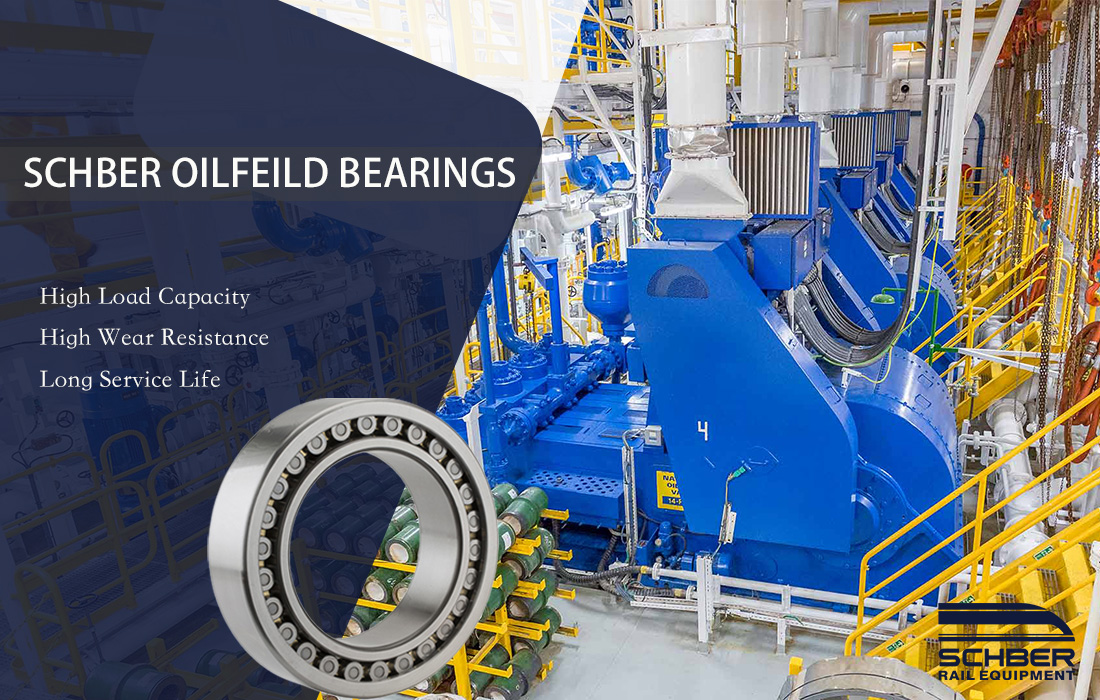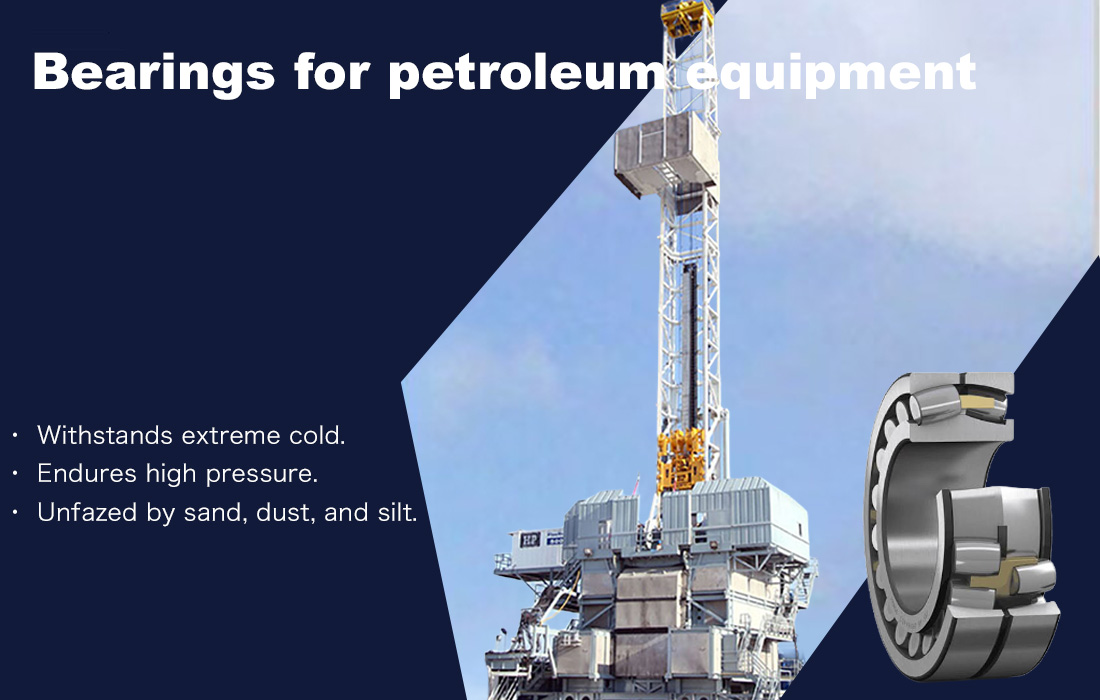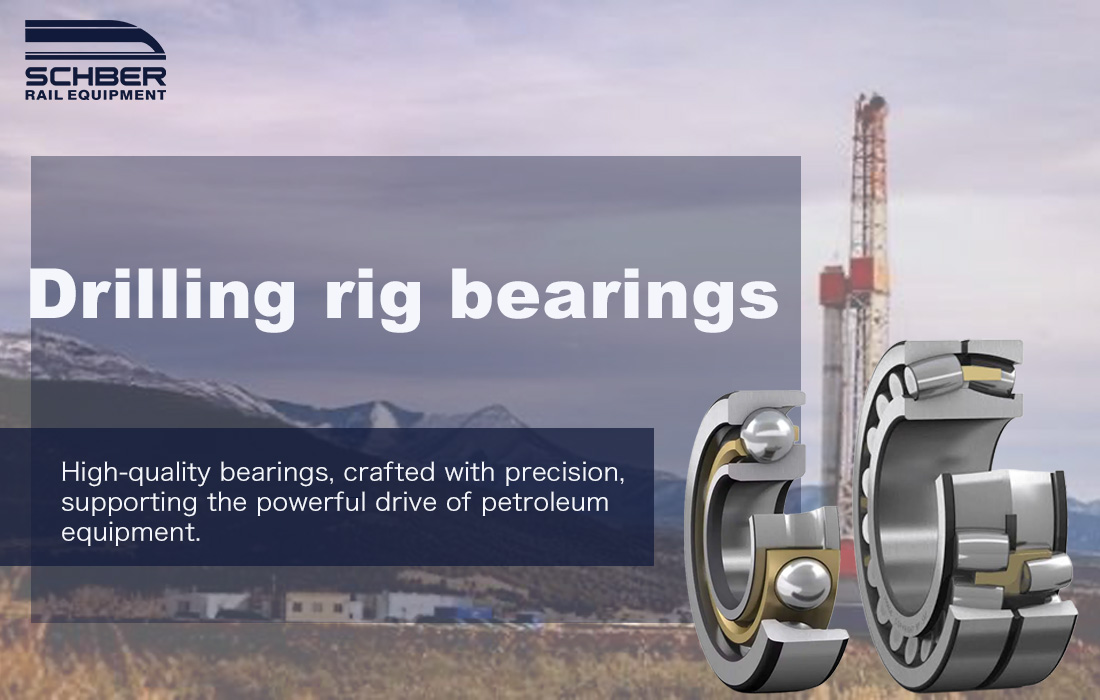
Drilling equipment is essential for oil exploration and development, primarily used for drilling, hoisting (tripping) drill strings, circulating drilling fluid, and performing related auxiliary tasks. Because drilling equipment operates under complex conditions—including heavy loads, continuous operation, vibration, and shock—the internal transmission components place high demands on bearing performance. As critical mechanical components, bearings in drilling equipment support rotating parts, reduce friction, and transmit loads. Proper selection and use of bearings for oil drilling rigs help enhance the operational stability and service life of the equipment.
What are the key components of an oil drilling rig?
A complete oil drilling rig typically comprises a power system, transmission system, hoisting system, rotating system, circulation system, and control/auxiliary systems. Key equipment includes drawworks, rotary tables, top drives, mud pumps, gear reducers, and power units.
Since these pieces of equipment involve rotating or transmission components during operation, they require various types of bearings. The specific bearing types and specifications selected depend on factors such as equipment structure, load magnitude, rotational speed, and the operating environment.
What bearings are used in drawworks?
The drawworks is a vital component of the drilling rig’s hoisting system, primarily used for raising and lowering equipment such as drill strings and casing. During operation, the drawworks’ transmission shafts and related components must withstand significant radial loads, as well as potential shock loads caused by starting and braking.
Consequently, bearings used in drawworks require high load-carrying capacity, impact resistance, and operational stability. For heavy-duty drawworks, cylindrical roller bearings, tapered roller bearings, or other suitable heavy-duty bearings may be selected based on the specific structure and load conditions.
Applications of mud pump bearings
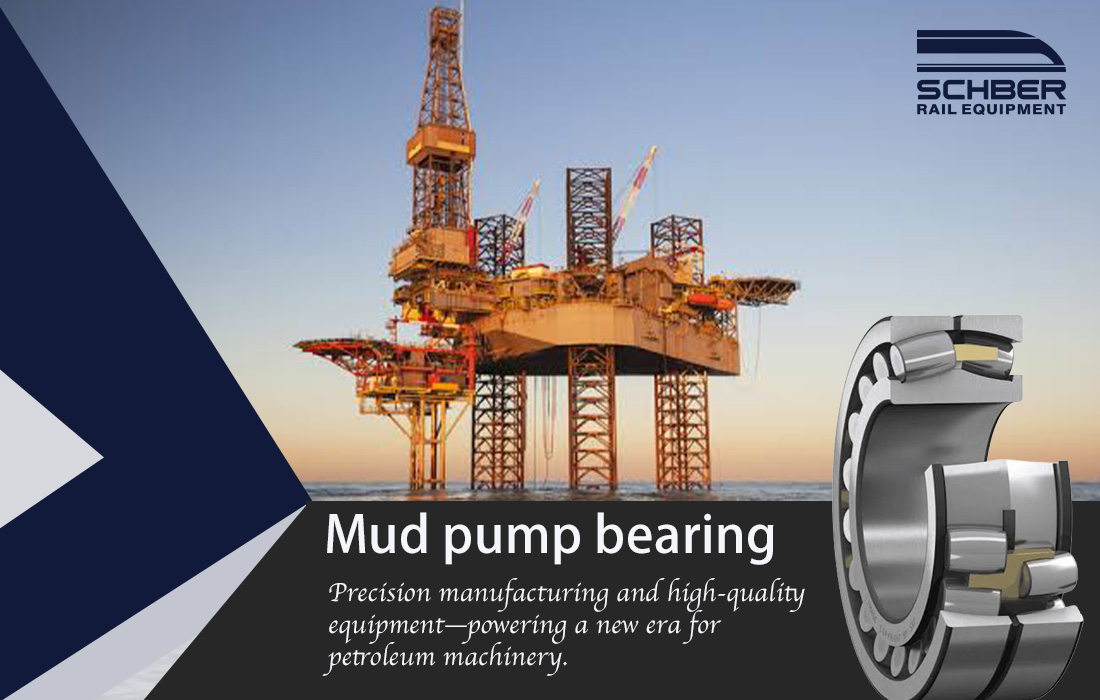
The mud pump is a crucial piece of equipment in the drilling circulation system, primarily used to pump drilling fluid into the wellbore. During continuous operation, the internal transmission mechanism of the mud pump is subjected to heavy loads and cyclical shocks; therefore, high reliability is required of the bearings. Mud pump bearings must be selected based on the pump’s structure, rotational speed, and load, while also taking factors such as lubrication, sealing, and heat dissipation into account. High-quality bearings help minimize friction and wear during power transmission, thereby supporting the long-term, stable operation of the mud pump.
Bearings in Top Drive Systems
Installed atop the drilling rig derrick, the top drive system is a crucial component of modern drilling equipment, capable of directly driving the rotation of the drill string. During operation, the top drive must withstand axial and rotational loads generated by the drill string, as well as significant shock and vibration; consequently, the bearings require high load-bearing capacity and operational reliability.
Bearings for top drives are typically selected based on the specific equipment model and operating parameters, with a focus on metrics such as axial and radial load capacities, rotational speed, lubrication, and service life.
Bearings in Gear Reducers
Gear reducers in drilling equipment are primarily used to adjust rotational speed and transmit power; the internal gears and shaft assemblies generate substantial radial and axial loads during operation. Bearings within the reducer must not only support the drive shaft but also ensure the gear transmission system maintains optimal operating conditions.
Therefore, bearings for drilling rig gear reducers generally require high load-bearing capacity and wear resistance. For equipment subject to long-term continuous operation, factors such as fatigue life, lubrication conditions, and operating temperatures are also critical considerations.
What performance requirements do drilling equipment bearings need to meet?
Given the complex operating environments of drilling equipment, the performance requirements for oil drilling rig bearings are primarily focused on the following areas:First, high load-bearing capacity.Drilling operations generate significant radial and axial loads; therefore, bearings must possess sufficient rated load capacity.Second, resistance to shock and vibration.Strong shocks and vibrations can occur during rig startup, braking, and the actual drilling process, necessitating excellent structural stability in the bearings.Third, wear and fatigue resistance.Drilling equipment operates for extended periods, subjecting bearings to continuous friction and cyclic loading; superior wear resistance helps extend the service life.Fourth, effective sealing and lubrication performance.** Drilling sites often present contaminants such as drilling mud, dust, and moisture; a well-designed sealing structure helps minimize the ingress of these contaminants into the bearing. Additionally, the lubrication method should be selected based on rotational speed, operating temperature, and load conditions.
How do you select the right bearings for drilling equipment?
Selecting bearings for drilling rigs requires a comprehensive assessment based on the specific equipment model and actual operating parameters. First, it is essential to determine the radial and axial loads the bearing will encounter. Next, factors such as rotational speed, operating temperature, shock and vibration, and mounting dimensions must be considered. Furthermore, the appropriate sealing structure should be determined based on the equipment’s lubrication system and operating environment.
Bearings should be selected according to the specific operating characteristics of different equipment—such as drawworks, mud pumps, top drives, and gearboxes—rather than relying on a one-size-fits-all selection standard.
Conclusion
Although bearings are fundamental components of drilling equipment, they are critical to the stable operation of rotation and transmission systems. Bearings for drilling equipment and oil rigs must be carefully selected to withstand high loads, intense vibration, shock loads, and complex operating environments. By choosing the right bearing configuration—combined with proper installation, effective lubrication, and regular maintenance—operators can reduce the risk of equipment failure and ensure more stable, reliable performance for oil drilling operations.