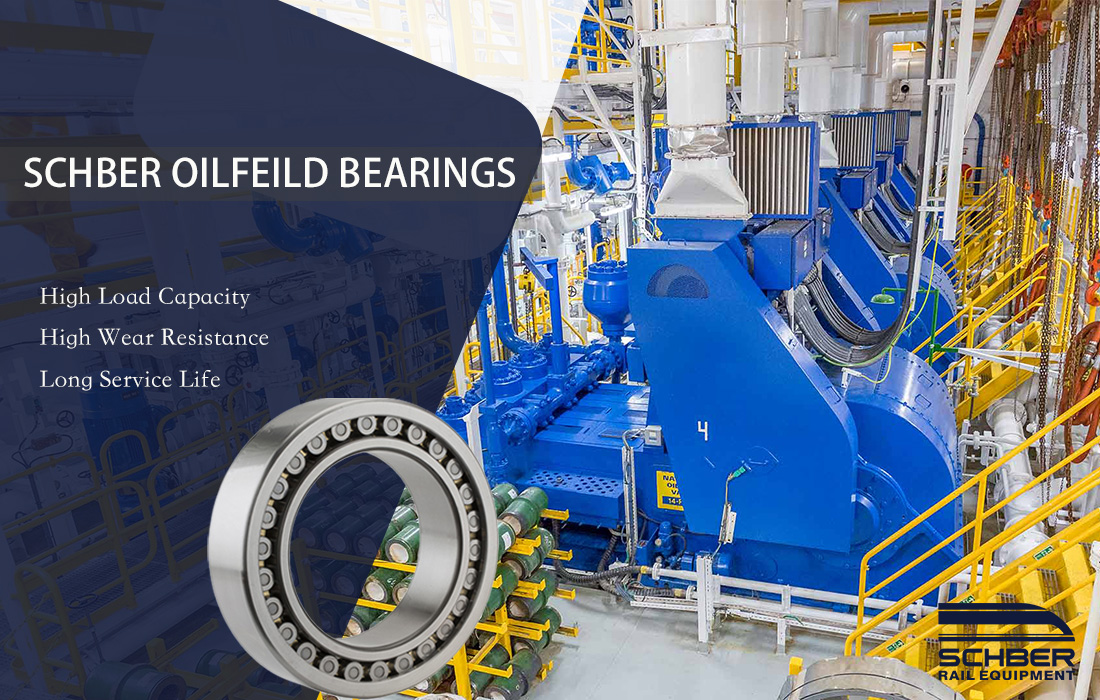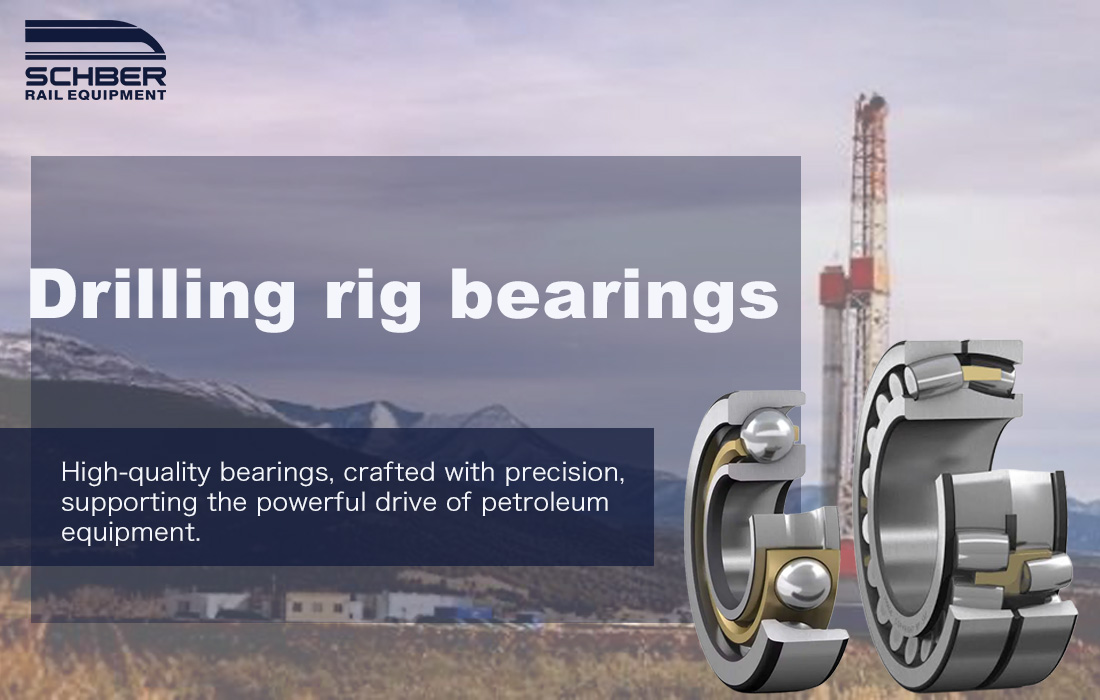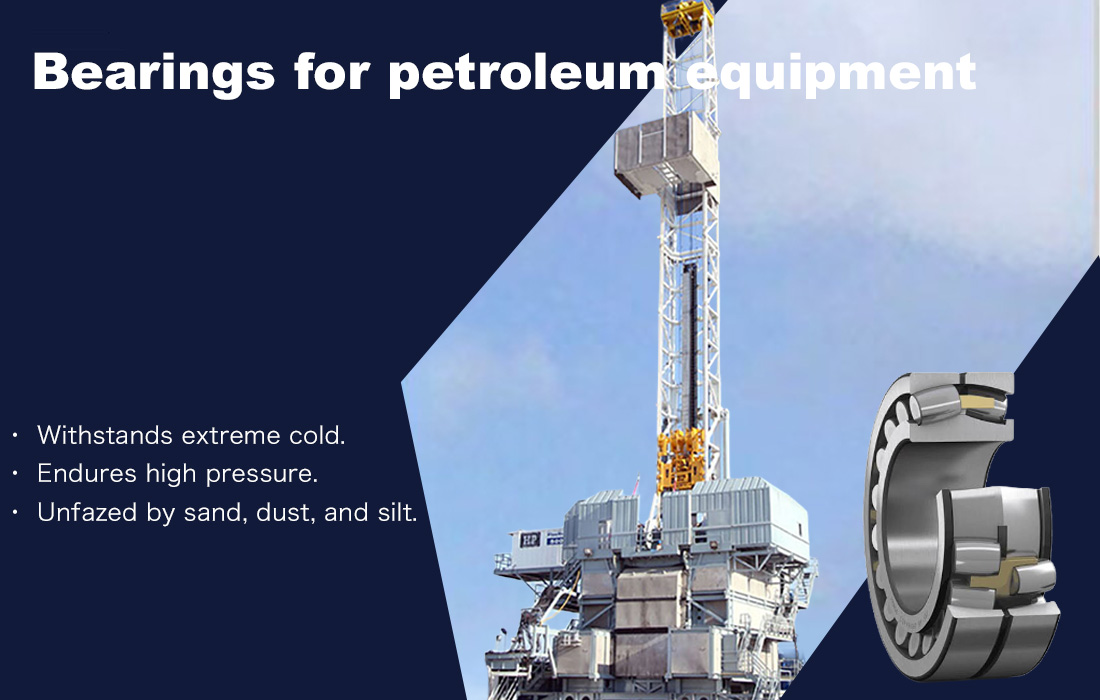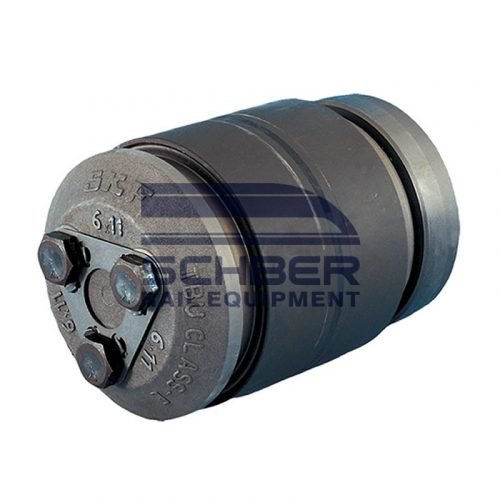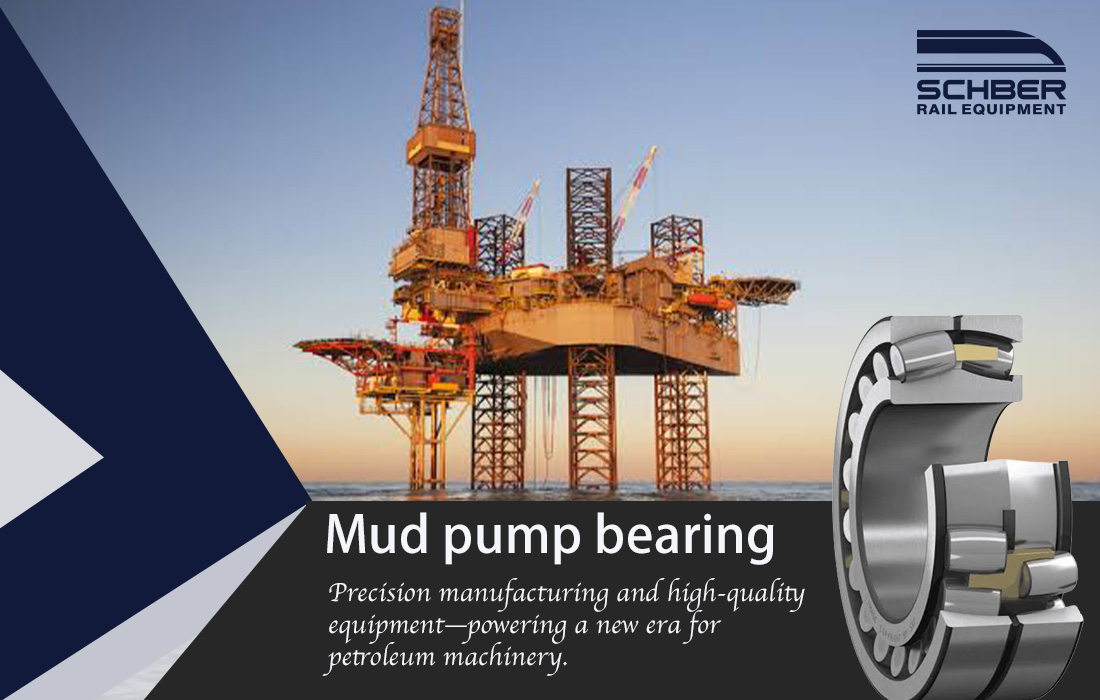
Petroleum machinery typically operates under high loads, undergoes prolonged continuous running, and functions in complex environments. As critical mechanical transmission components, bearings directly influence the operational stability and service life of petroleum equipment. Different types of petroleum equipment impose varying requirements regarding load-bearing capacity, rotational speed, wear resistance, and sealing performance. Properly selecting bearings for petroleum machinery not only enhances operational efficiency but also helps reduce maintenance and replacement costs.
Common Bearing Types in Petroleum Machinery
Bearings commonly used in petroleum machinery include deep-groove ball bearings, cylindrical roller bearings, tapered roller bearings, and spherical roller bearings. Deep-groove ball bearings are suitable for equipment operating at high speeds and subject to both radial and moderate axial loads. Cylindrical roller bearings offer excellent radial load-bearing capacity, making them ideal for heavy-duty transmission components. Tapered roller bearings can simultaneously withstand significant radial and axial loads, making them suitable for petroleum equipment subjected to high combined loads. Spherical roller bearings possess self-aligning capabilities, offering superior adaptability in operating conditions characterized by significant vibration or installation misalignment.
Therefore, bearing selection should not be based solely on the equipment name; instead, a comprehensive assessment based on specific operating conditions is required.
1. Selecting Bearings Based on Load Magnitude
Load is a primary factor to consider when selecting bearings for petroleum machinery. Significant differences exist in the radial, axial, and combined loads generated during the operation of different types of equipment.
For heavy-duty equipment, priority should be given to roller bearings with high load-bearing capacities. If the equipment is subject to significant axial and radial loads simultaneously, a bearing configuration capable of handling combined loads must be selected. Properly matching the bearing’s rated load capacity helps minimize abnormal wear during operation.
2. Selecting Bearings Based on Rotational Speed
Equipment rotational speed also affects bearing performance. During high-speed operation, internal friction generates heat; if the bearing structure, lubrication method, or lubricant choice is inappropriate, excessive temperature rise may occur.
For high-speed petroleum machinery, key factors to consider include the bearing’s limiting speed, friction characteristics, cage structure, and lubrication conditions. For low-speed, heavy-load equipment, greater emphasis is typically placed on the bearing’s load-carrying capacity and impact resistance.
3. Consider operating temperature
Petroleum equipment may operate in environments with varying temperatures; therefore, appropriate materials, greases, or lubricating oils must be selected based on the actual operating temperature.
If the equipment operates in a high-temperature environment for extended periods, attention should be paid to the bearing material and the quality of heat treatment, while also selecting a lubrication scheme suitable for high-temperature conditions. For equipment subject to significant temperature fluctuations, the impact of changes in bearing clearance on operational stability must also be considered.
4. Address impact loads and vibration
Petroleum machinery—such as drilling equipment, mud pumps, and pumping units—can generate significant vibration and impact loads during operation. If a bearing lacks sufficient impact resistance, prolonged operation may lead to fatigue damage in components such as raceways and rolling elements.
Therefore, for equipment subject to high impact loads, bearings with high load-carrying capacity and impact resistance should be selected based on actual operating conditions, and installation precision and bearing clearance must be properly controlled.
5. Select sealing structures based on the operating environment
The operating environment for petroleum machinery may involve dust, mud, moisture, and other contaminants. If contaminants enter the bearing, they can accelerate wear on the rolling elements and raceways.
Consequently, sealing performance is a critical consideration when using bearings in complex environments. An effective sealing structure minimizes the ingress of external contaminants and helps maintain proper lubrication, thereby reducing the risk of bearing failure.
6. Determine bearing dimensions and installation conditions
Bearing dimensions must match the equipment’s shaft diameter, the available space in the bearing housing, and the installation structure. Selection typically involves confirming basic dimensions—such as inner diameter, outer diameter, and width—while also considering the fit between the shaft and the housing.
For equipment with specialized structural designs, the appropriate bearing model must be selected based on installation space, load direction, and maintenance requirements to avoid issues such as dimensional mismatches or installation difficulties.
7. Select an appropriate lubrication method
Proper lubrication reduces internal friction and wear within the bearing. Common lubrication methods for petroleum machinery include grease lubrication and oil lubrication; the specific choice depends on factors such as rotational speed, temperature, load, and equipment structure. High-speed equipment typically requires a greater focus on heat dissipation and lubrication efficiency, whereas low-speed, heavy-load equipment demands lubricants with superior load-bearing and anti-wear capabilities.
8. Comprehensive Consideration of Bearing Service Life
For petroleum machinery, bearings must not only meet initial operational requirements but also offer a long service life. Frequent bearing replacement not only increases component costs but can also lead to equipment downtime, thereby impacting production efficiency.
Therefore, when selecting components for petroleum machinery, one should comprehensively consider factors such as bearing material, manufacturing precision, load capacity, operating environment, lubrication conditions, and maintenance requirements to ensure the chosen product matches actual working conditions.
Conclusion
Selecting bearings for petroleum machinery requires a comprehensive assessment based on actual operating conditions. Key factors to consider include load, rotational speed, temperature, shock and vibration, environmental contamination, installation dimensions, lubrication methods, and expected service life. Only by selecting the appropriate bearing type and specifications based on actual operating conditions can the bearing’s performance be fully realized, ensuring the long-term, stable operation of petroleum equipment.
When procuring bearings for petroleum machinery, it is advisable to fully understand the equipment parameters and operating conditions—and to consult with professional bearing suppliers—before finalizing the model selection, thereby ensuring the choice of the most suitable components.