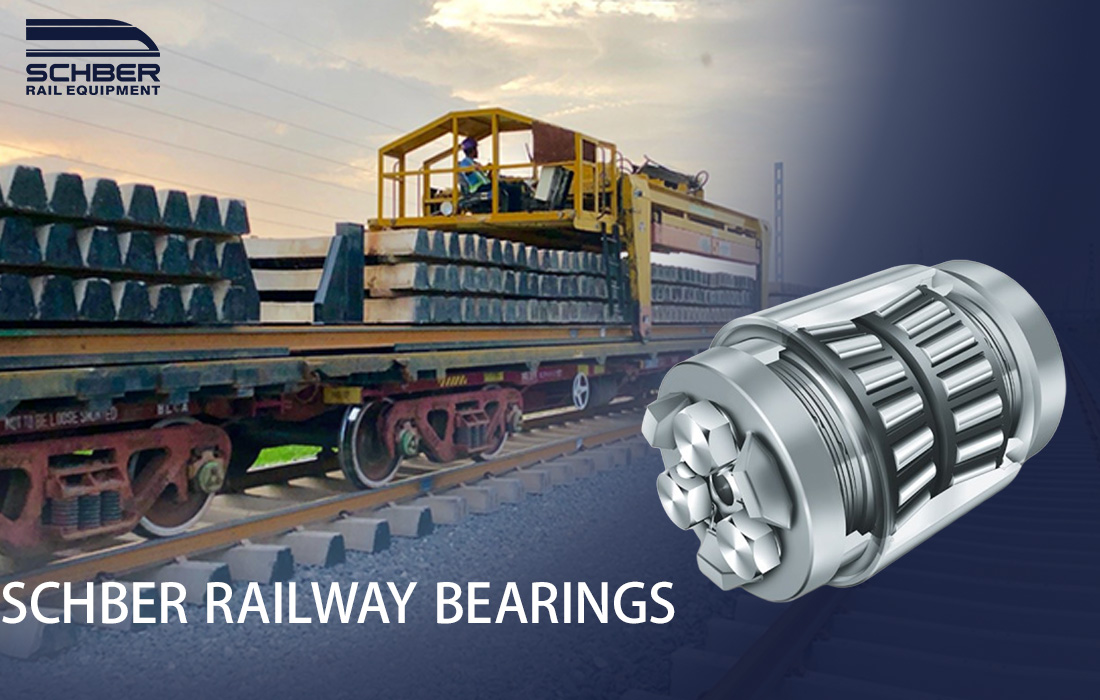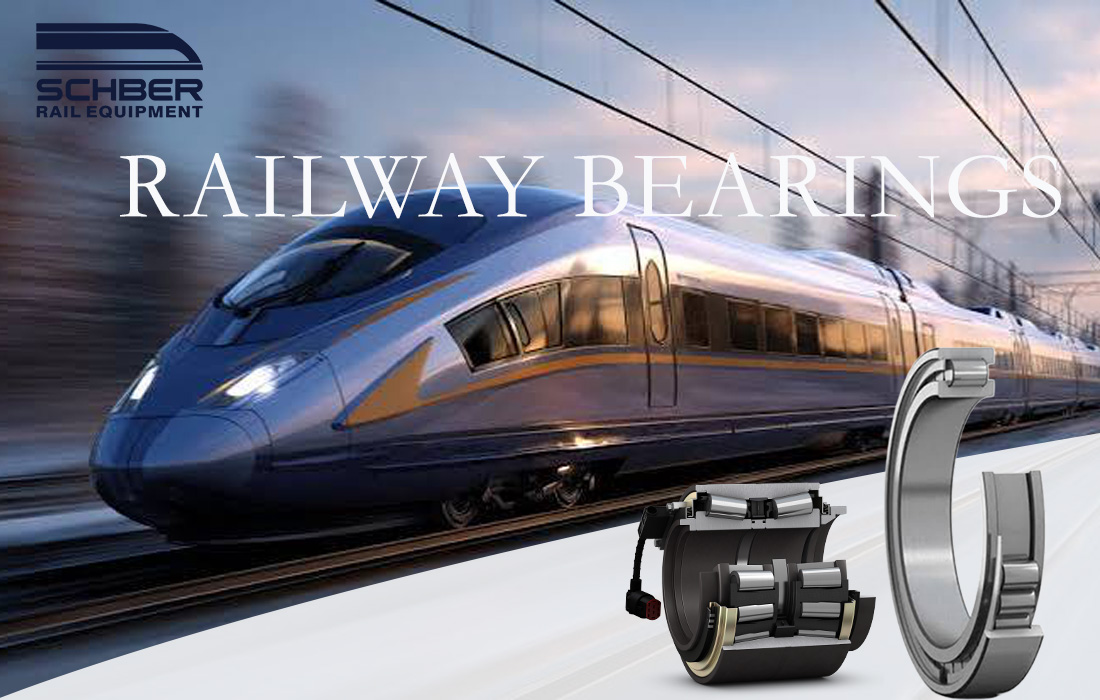
Railway bearings are key fundamental components of railway vehicle running gear. They are primarily installed in the wheelsets, axles, and axle boxes of railway vehicles to support the axles, withstand radial and axial loads generated during vehicle operation, and ensure smooth wheel rotation under high-speed, heavy-load conditions. As a crucial component of railway equipment, railway bearings directly affect the safety, stability, and transportation efficiency of train operation and are widely used in high-speed railways, EMUs, passenger cars, freight cars, subways, and urban rail transit.
Product Definition
Railway bearings are high-performance rolling bearings specifically designed and manufactured for railway transportation conditions. Compared to ordinary industrial bearings, they have higher load-bearing capacity, longer fatigue life, superior sealing performance, and stronger impact resistance, meeting the requirements of long-term, high-speed, and continuous operation of railway vehicles.
Product Features
Railway bearings possess the following key characteristics:
High load-bearing capacity, capable of withstanding heavy-load transportation demands;
High rotational accuracy, ensuring smooth high-speed train operation;
Excellent shock and vibration resistance, adaptable to complex railway lines;
Low friction, low temperature rise, and low noise, improving operating efficiency;
Excellent sealing performance, effectively preventing dust, moisture, and impurities from entering;
Long life design, reducing maintenance frequency and lowering operating costs;
High operational reliability, meeting the stringent safety requirements of the railway industry.
Structural Composition
Railway bearings typically consist of an inner ring, outer ring, rolling elements, cage, seals, and a lubrication system. Some products utilize an integrated sealed bearing unit design, pre-lubricated at the factory, effectively improving sealing performance and reducing subsequent maintenance workload.
Product Types
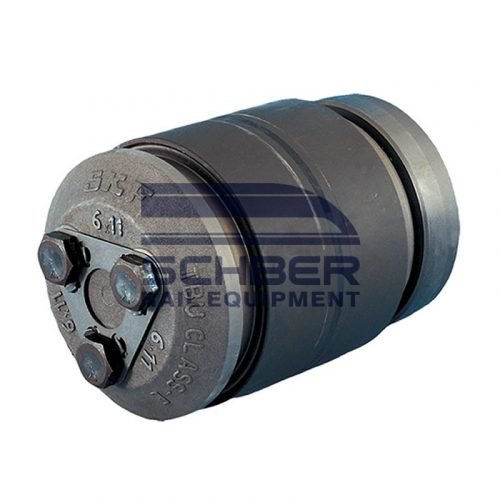
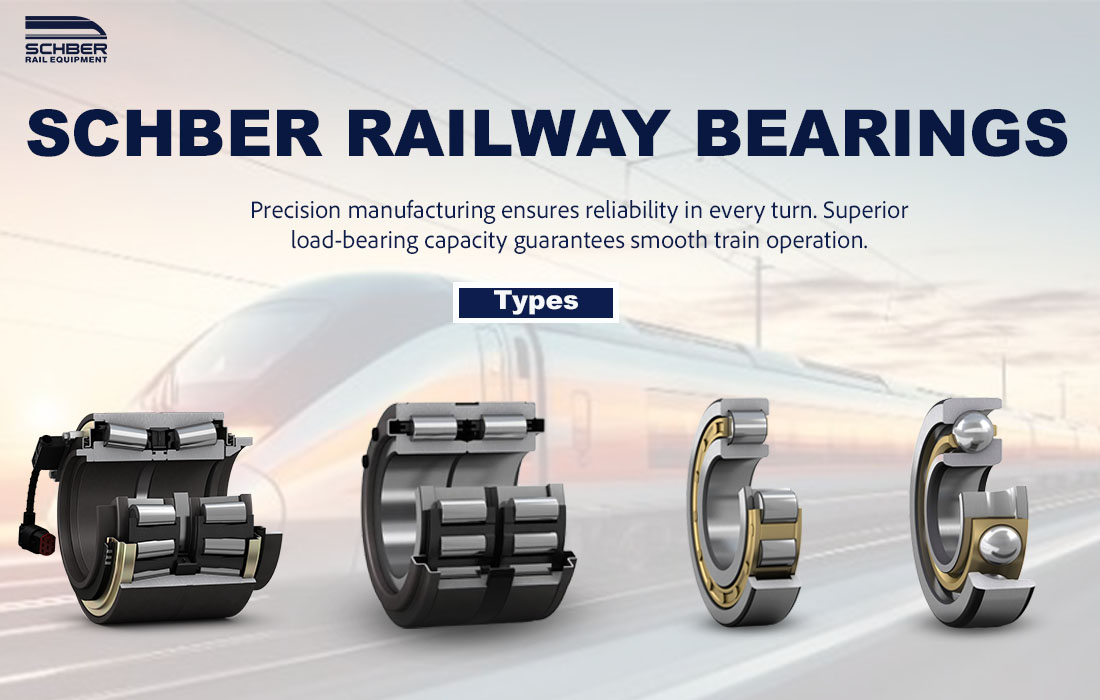
Depending on the vehicle type and operating conditions, railway bearings mainly include the following types:Tap Roller Bearings.Double-row tapered roller bearings.Compact structure, high rigidity, and strong load-bearing capacity; widely used in railway passenger cars, freight cars, and EMU wheelsets.Cylindrical roller bearings.High radial load capacity and low frictional resistance; suitable for high-speed equipment.Sealed unit railway bearings.Utilizing an integral sealed structure, they are maintenance-free or require minimal maintenance, effectively extending their service life.
Application Areas
Railway bearings are widely used in various rail transit equipment, including:
- High-speed trains
- Railway passenger cars
- Railway freight cars
- Electric locomotives
- Diesel locomotives
- Metro vehicles
- Urban rail transit vehicles
- Heavy-haul railway transport equipment
- Industrial and mining railway vehicles
- Common Models
Railway bearings offer a wide range of models, selectable based on different vehicle types, axle diameters, and loads. Common series include:
Double-row tapered roller bearings
TBU railway bearing units
AP series railway bearings
TAROL railway bearings
Railway-specific sealed bearings
The company can also provide non-standard customized products to meet the railway standards and application requirements of different countries.
Performance Requirements
The complex railway transportation environment places extremely high demands on railway bearings. High-quality railway bearings typically possess the following properties:
High-precision operation
Long fatigue life
High wear resistance
High reliability
Excellent sealing performance
Good corrosion resistance
High and low temperature resistance
Long-term stable operation capability
Development Trends
As global railway transportation continues to develop towards higher speeds, heavier loads, and greater intelligence, railway bearings are upgrading towards higher precision, longer lifespan, lower friction, lighter weight, and intelligent monitoring. In the future, through advanced materials, heat treatment processes, and online condition monitoring technology, railway bearings will play an even more important role in improving railway transportation safety, reducing maintenance costs, and increasing operational efficiency.
Summary
Although railway bearings are basic components in railway equipment, they bear the crucial tasks of supporting vehicles, transmitting loads, and ensuring smooth operation. High-quality railway bearings not only ensure the long-term stable operation of trains but also effectively improve transportation efficiency and reduce operating costs, providing a solid and reliable guarantee for modern rail transit and railway transportation. With the continuous development of the railway industry, railway bearings will play an increasingly important role in a safe, efficient, and intelligent transportation system.